

News
23.09.2019
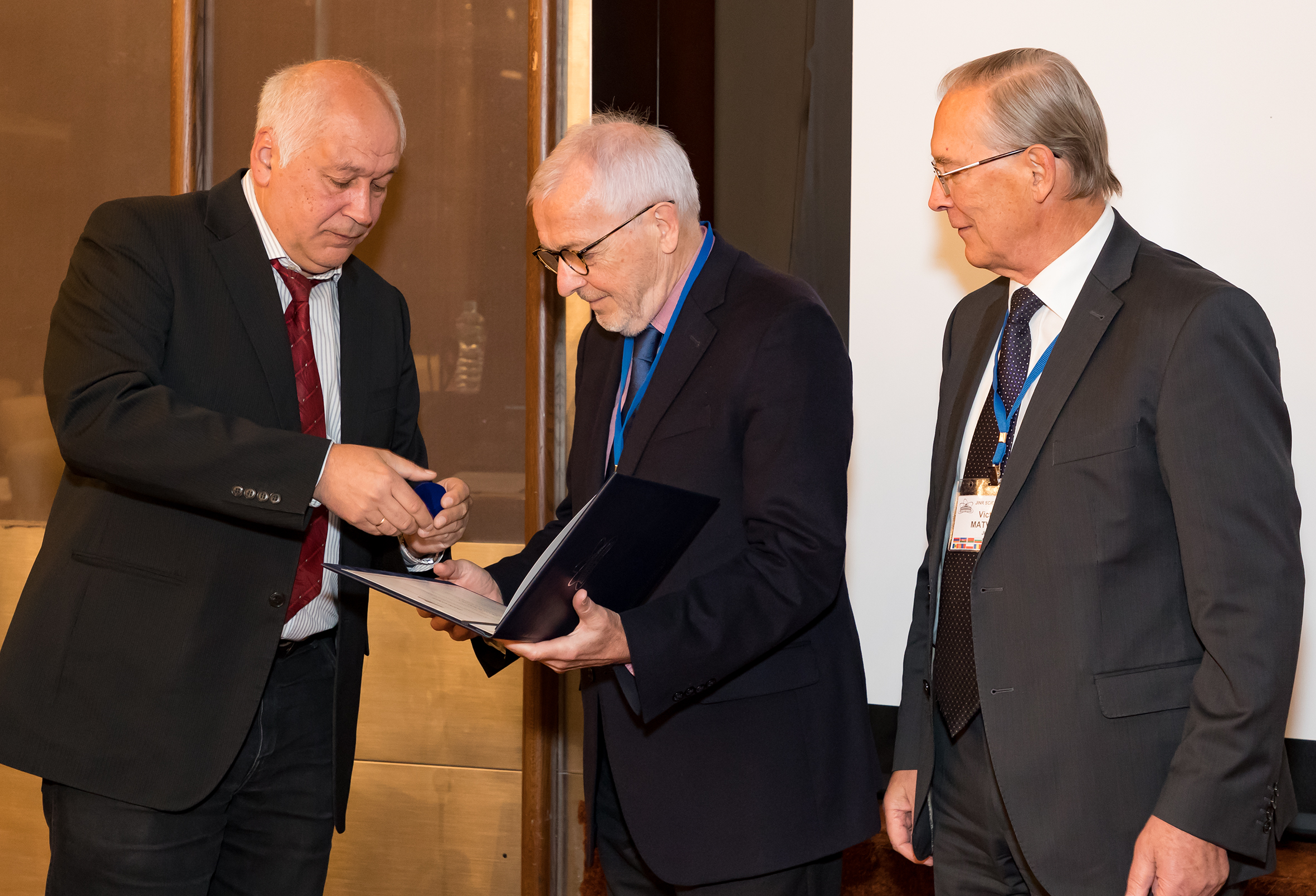
Within the 126th session of the JINR Scientific Council, which took place in Dubna from 19 to 20 September 2019, Professor Francis Halzen (University of Wisconsin, Madison, USA) was awarded the Bruno Pontecorvo Prize 2018 for significant contribution to the IceCube detector construction and experimental discovery of high-energy astrophysical neutrinos.Francis Halzen is a researcher in the fields of particle physics, astrophysics and cosmology. He works at the University of Wisconsin in Madison. He is the head of the IceCube project.
The Bruno Pontecorvo Prize is an international award being annually presented by the JINR Scientific Council for achievements in elementary particle physics.

19.09.2019
The 27th annual European School on High-Energy Physics (ESHEP2019) was given from 4 to 17 September 2019 in St. Petersburg. These Schools are systematically arranged in one of the Member States of two major international scientific centres: the European Organization for Nuclear Research (CERN, Geneva) and the Joint Institute for Nuclear Research (JINR, Dubna).This series of schools, famous as CERN-JINR schools, traditionally attract much attention of the youth thanks to a sophisticated scientific programme, well-developed format, and a careful choice of lecturers and leaders of discussions.About 100 listeners from more than 30 countries participated in the School. Most of them are post-graduate students who finish their dissertations, possess a high scientific potential, and take part in recent research.Leading scientists – world specialists in the main fields of modern high energy physics deliver their lectures and conduct discussions. In particular, a lecture on the Standard Model was given by A.V. Bednyakov, on cosmology – by V.A. Rubakov, on heavy quark physics – by M.I. Vysotskiy; A.V. Gladyshev, D.G. Levkov and E.Ya. Nugayev led discussions.CERN Director-General Prof. Fabiola Gianotti and JINR Director, RAS Academician Victor Matveev presented traditional lectures on scientific programmes and prospects for research in the fields of high energy and particle physics.
In the frames of the School, a meeting with the participation of the public took place. The event started with a lecture by CERN Director-General Fabiola Gianotti, and continued with a question-and-answer session and a round-table discussion about the role of fundamental science in the development of the modern society. The JINR Director, RAS Academician V. A. Matveev, Deputy Academician Secretary and Head of the RAS Department of Physical Sciences Academician V. A. Rubakov, First Deputy Minister of Science and Higher Education, RAS Academician G. V. Trubnikov, SPbSTU Deputy Rector of Science Professor S.V. Mikuschev attended this meeting, as well as listeners of the School, researches and students from the institutions of higher education of St. Petersburg, and senior year students.
Thus, the whole series of European Schools of High-Energy Physics organized by CERN and JINR continues to fulfil its scientific and cultural mission at a high level constantly enhancing the programme and formats of interaction with the audience and the public.
19.09.2019
Most results of neutrino oscillation experiments can be successfully described by the three-component neutrino theory (PMNS matrix). However, observed anomalies (reactor and Gallium neutrino anomaly, inconsistent results at the LSND and MiniBooNE experiments) can be also explained by the existence of a sterile neutrino. This fourth type of neutrino does not interact in a standard way (hence the use of the term “sterile”), but mixes (oscillates) with the others. Expected range of the mixing phase space Dm2 ~ 2 eV2, sin2(2q) ~ 0.1 was determined by global analysis of available experimental data with the best value in the region Dm2 ~ 2 eV2, sin2(2q) ~ 0.1. The possible existence of a new fundamental physics triggered experimental tests in different research directions to check the hypothesis.
The current status of major short-baseline reactor experiments, such as DANSS, PROSPECT, STEREO etc. will be reported at this seminar. Various compact neutrino detectors (mass ~ 1-5 tonnes) located next to different reactors (5-25 m away) are operating in these projects. Today, a lot of experiments are accumulating their data and publishing new results, which will be discussed at the seminar.

13.09.2019
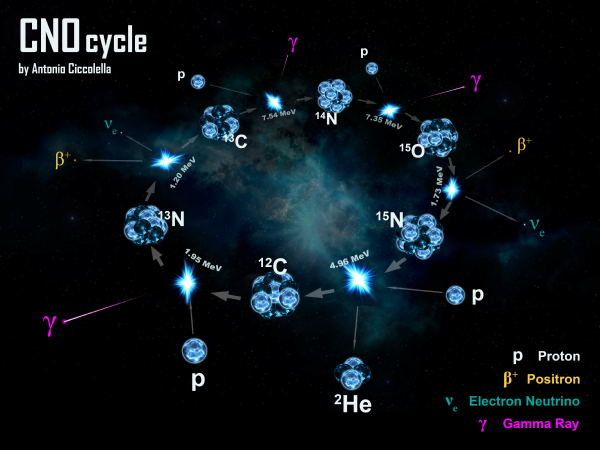
The review of experimental neutrino geophysics by the DLNP senior researcher Oleg Smirnov is accepted for publication by “Progress in Particle and Nuclear Physics”. Electronic version is available online under the following link: https://doi.org/10.1016/j.ppnp.2019.103712.
Experimental aspects of the geoneutrino detection are discussed in the review, including detailed analysis of the current methodology of antineutrino detection in the reaction of inverse beta-decay on the free proton (IBD); detailed discussion of possible background contributions in the observed IBD signal and the methods of their suppression. Status and perspectives of antineutrino detection methods are presented, including those aimed at the detection of potassium-40 contribution that was not previously observed because of high threshold of the IBD reaction. The possibility to use the direction of geoneutrino response to extract the mantle data is considered.
13.09.2019
Today, three officials from Italy’s National Institute for Nuclear Physics (INFN) will face trial for overlooking environmental safety regulations at the National Laboratory Gran Sasso. The matter was recently reported by Nature (https://www.nature.com/articles/d41586-019-01552-5).
Prosecutors in nearby Teramo have charged the INFN president Fernando Ferroni, the director of Gran Sasso Laboratory Stefano Ragazzi and the head of the lab’s environmental services Raffaele Adinolfi Falcone with the incorrect functioning of the lab’s environmental safety systems. If found guilty, they will face fines and sentences of up to four years in prison.
02.09.2019
On 1 September 2019 JINR instituted and launched the Dissertation Councils authorized to independently confer academic degrees.
30.08.2019
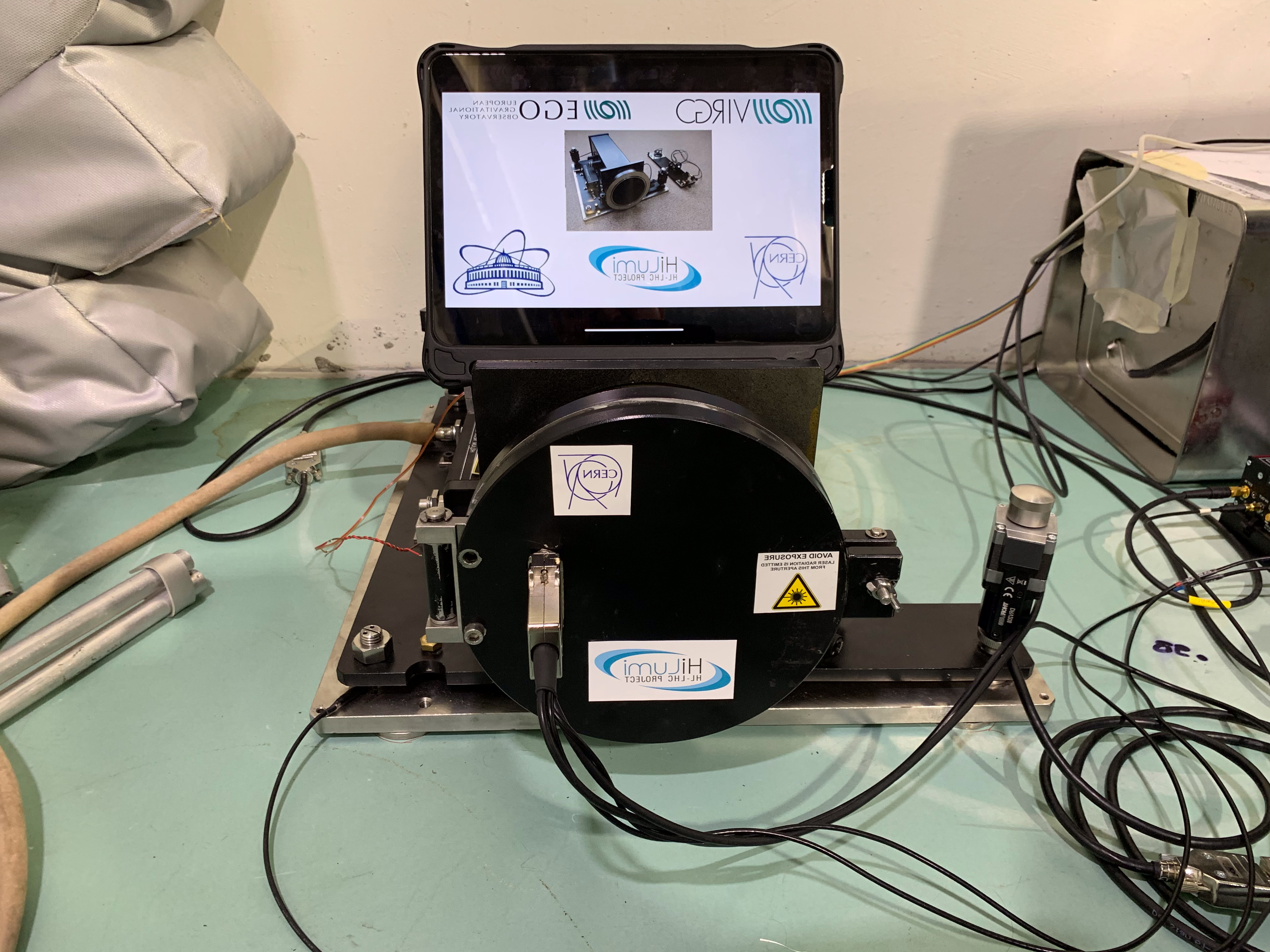
On 5-15 August 2019, the Precision Laser Inclinometer (PLI), an innovative instrument for monitoring angular microseismic activity, was installed and put into operation on the VIRGO Interferometric Gravitational-Wave Antenna (IGA) premises by a group of scientists including B. Di Girolamo (CERN), M.V. Lyablin (JINR), and N.S. Azaryan (JINR). The PLI will help reduce the effect of angular microseismic ground inclinations on the IGA sensitive elements, which will improve the IGA sensitivity in the range of frequencies corresponding to the merging of black holes and neutron stars in the universe.
21.08.2019
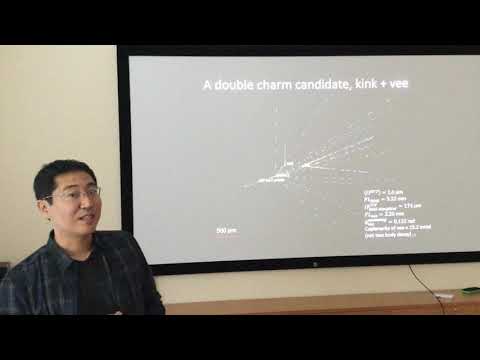
In the DsTau experiment at the CERN SPS, an independent and direct way to measure tau neutrino production following high energy proton interactions was proposed. Tau neutrino might be a key to understand interactions between heavy flavor leptons and quarks, however, it has hardly been studied among the standard models particles. The experimental measurements has been suffered by large uncertainty in its production. As the main source of tau neutrinos is a decay of Ds mesons, produced in proton-nucleus interactions, the project aims at measuring a differential cross section of this reaction. The experimental method is based on a use of high resolution emulsion detectors for effective registration of events with short lived particle decays. Recently, the project was approved by CERN SPSC.
29.07.2019
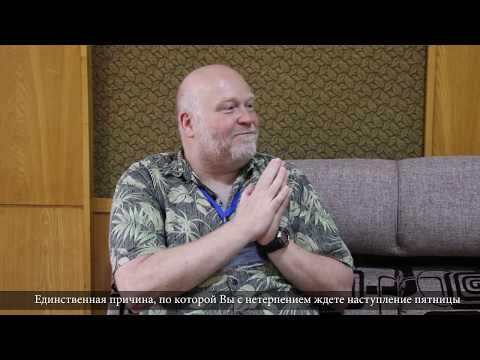
A very inspiring video interview with Professor Mark Vagins from the University of Tokyo (IPMU, Japan, Kavli) and the University of California (USA, Irvine) about the 16th International Baksan School on Particle Astrophysics “Particles and Cosmology”.
16.05.2019
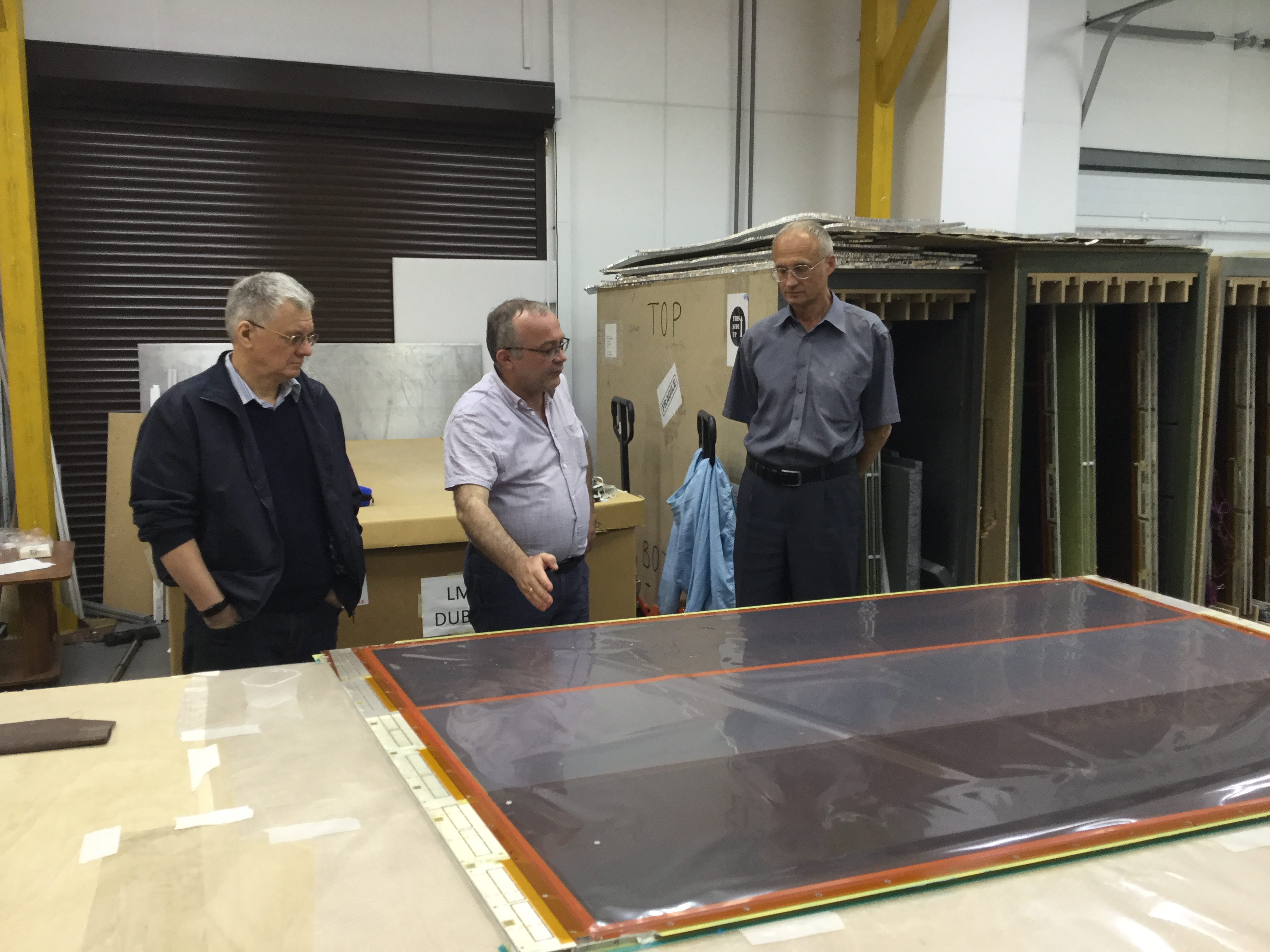
Вчера, 15.05.2019 г., Лабораторию ядерных проблем посетил главный бухгалтер ОИЯИ Сергей Николаевич Доценко. Сергею Николаевичу показали отремонтированную после пожара крышу, состояние на сегодняшний день конференц-зала и кабинетов на втором этаже административного корпуса ЛЯП.
В РХЛ Виктор Борисович Бруданин провел экскурсию и поделился планами и перспективами развития Отдела ядерной спектроскопии и радиохимии. Игорь Анатольевич Белолаптиков рассказал о последней зимней экспедиции проекта BaikalGVD, показал альфа-зал, где уже полным ходом идет изготовление оптических модулей для следующей зимней экспедиции на Байкал.
06.05.2019
The Joint Institute for Nuclear Research is seeking for outstanding postdoctoral fellows and announces a call for applications for a number of vacant scientific research positions. The new positions are opened within a special Programme aimed at reinforcing the scientific personnel involved in realization of the JINR top-priority projects in the fields of theoretical and experimental physics of elementary particles, relativistic heavy-ion physics, nuclear physics, condensed matter physics, and radiobiology. The Programme facilitates an opportunity for early-stage researchers pursuing science and engineering topics to be exposed and get involved in the forefront international projects in science and technical advancements at JINR Dubna.
30.04.2019
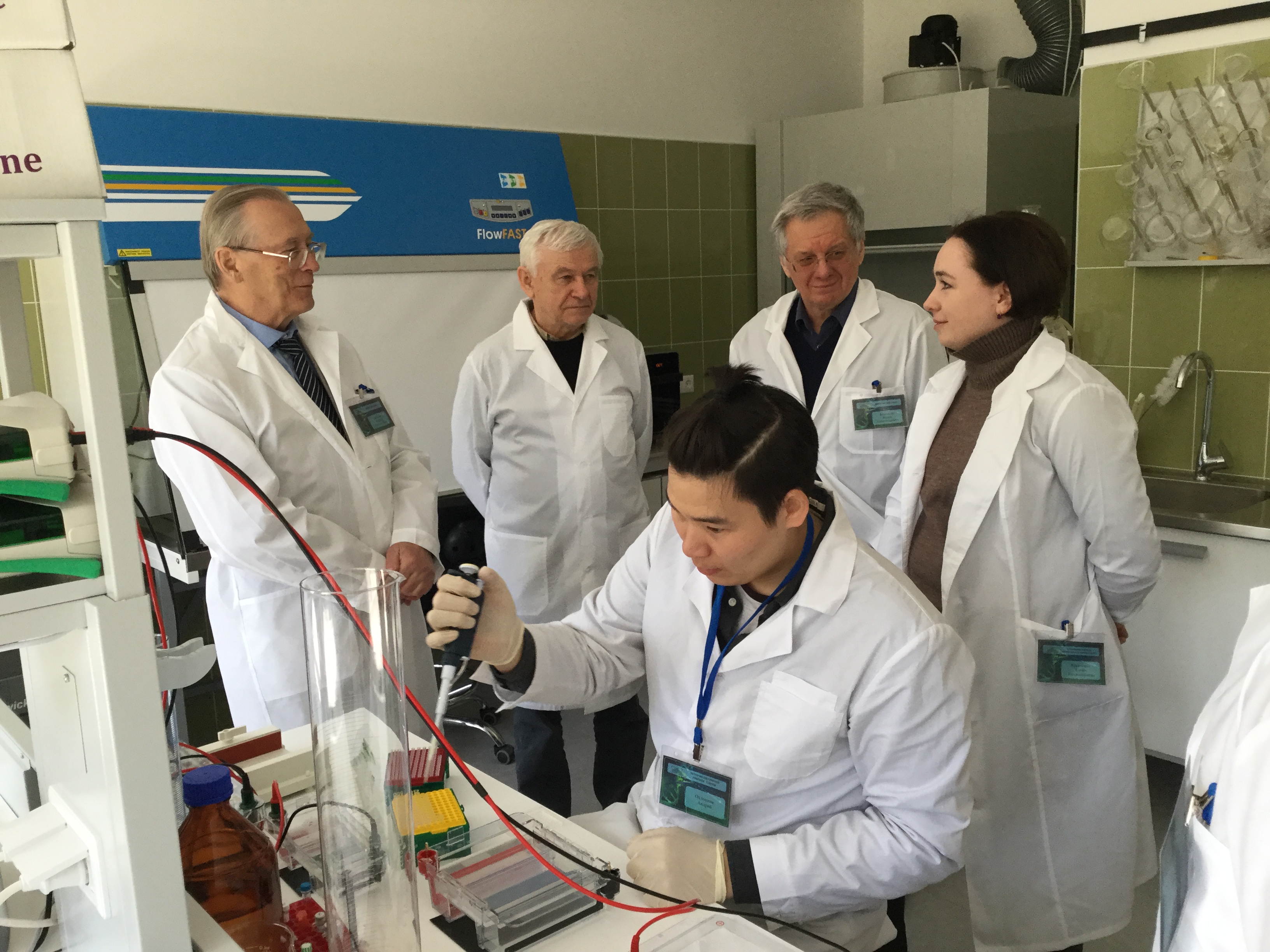
Сегодня, 30.04.2019 г., Лабораторию ядерных проблем посетили директор ОИЯИ В.А. Матвеев и вице-директор ОИЯИ Р. Ледницки. Со стороны ЛЯП во встрече участвовали В.А. Бедняков, Д.В. Наумов и А.А. Кульков. Гостям показали отремонтированную после пожара крышу, состояние конференц-зала и рабочих кабинетов на втором этаже административного здания ЛЯП на сегодняшний день. Обсуждение хода ремонтных работ продолжилось в кабинете замдиректора лаборатории Д.В. Наумова. Встреча завершилась посещением новой Лаборатории молекулярной генетики клетки, где к.б.н. Е.В. Кравченко рассказала о перспективах развития только что открывшейся лаборатории, об уникальном оборудовании и о том, какие исследования проводятся на нем.
Еще больше фото здесь.