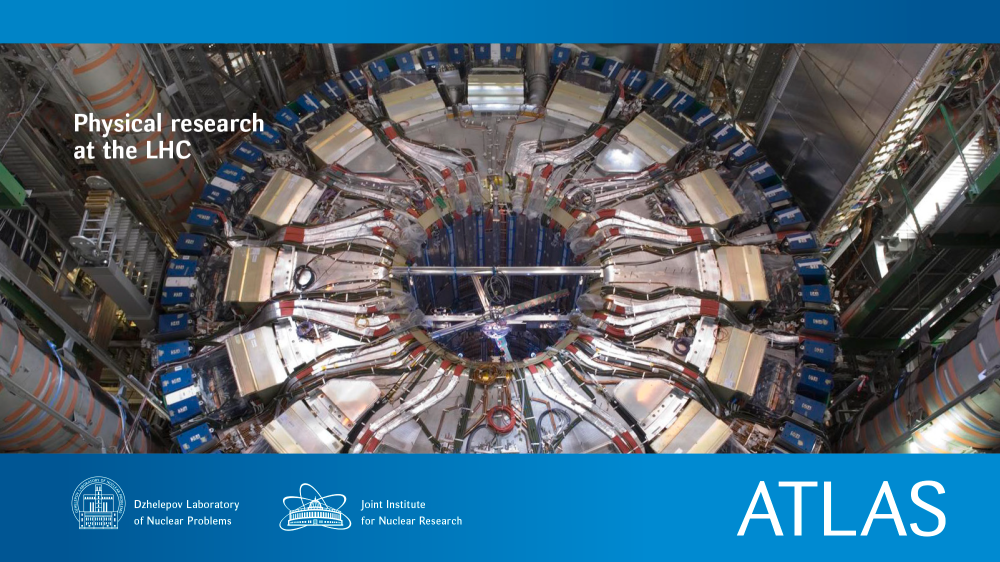
The main purpose of the international ATLAS experiment is investigation of proton-proton interactions at unprecedented energies at the LHC collider (from 7 to 14 TeV).
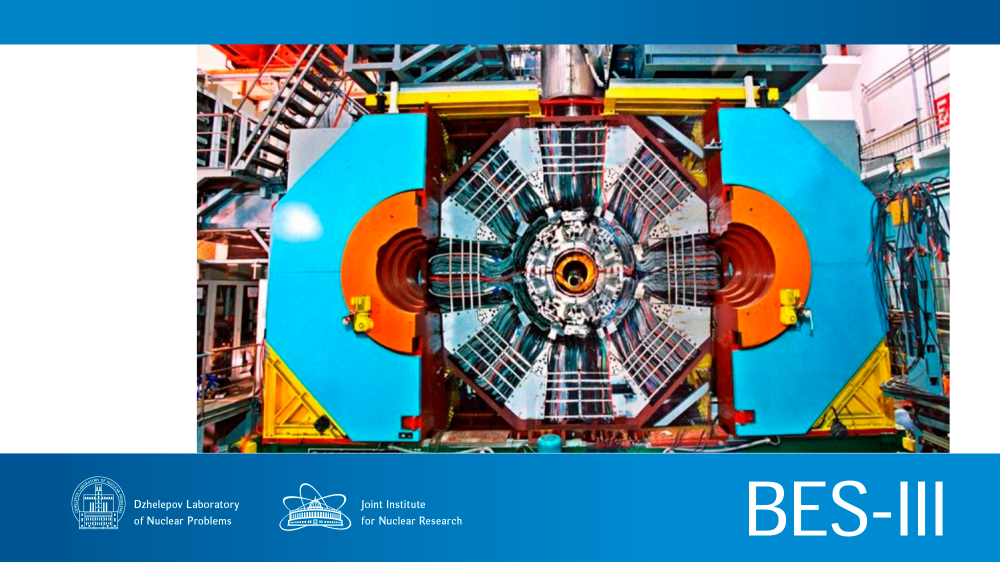
The goals of the JINR group in the BESIII project are to study hadronic QCD spectra and search for exotic states, study the production and decays of Charmonium states, search for exotic Charmonium states and charmonium-like structures, and determine c-quark fragmentation functions. The JINR group's participation in the project involves data analysis and development of algorithms for event reconstruction in the BESIII detector using machine learning methods.
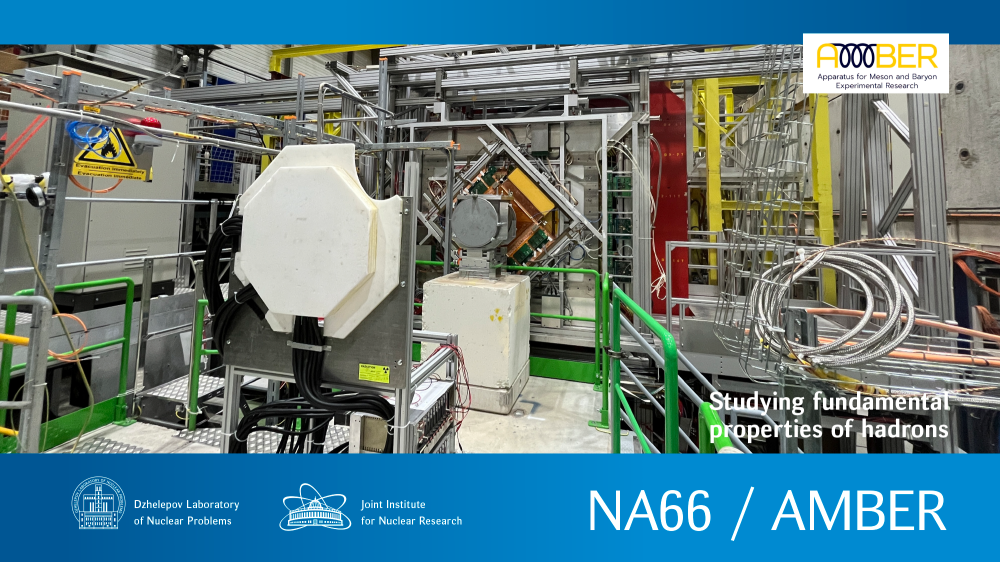
AMBER (Apparatus for Meson and Baryon Experimental Research) is a new experimental facility with a fixed target on the M2 beam line of the CERN SPS. The facility is designed to perform a variety of measurements aimed at addressing fundamental questions of quantum chromodynamics, which are expected to lead to a significant improvement in the understanding of QCD as a modern theory of strong interactions.
The discovery of the Higgs boson at the LHC marked the beginning of a new era in high-energy physics.
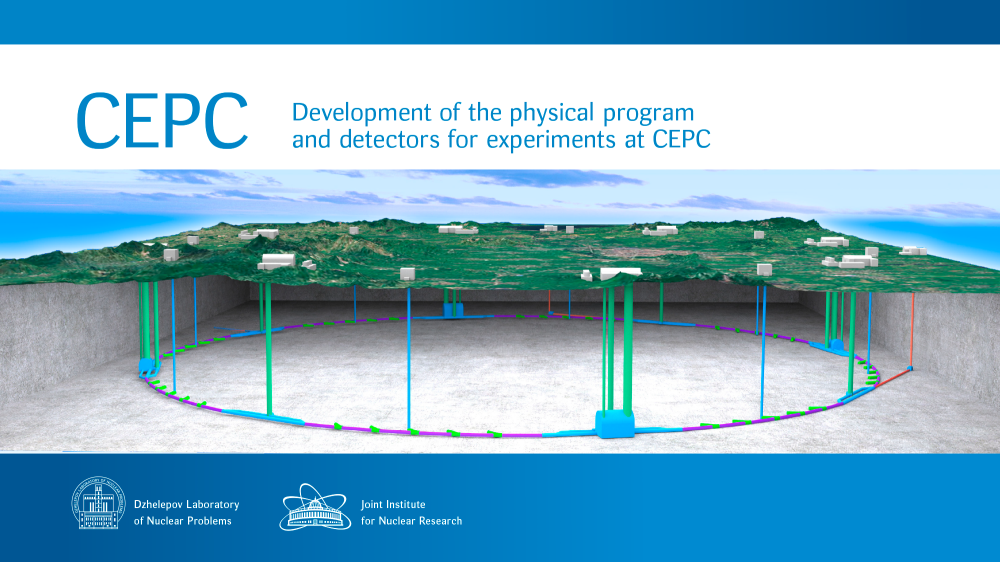
The proposed 100-km-circumference Circular Electron-Positron Collider (CEPC) program in China aims to make unprecedentedly precise measurements of the Higgs boson, test the predictions of electroweak theory, flavor physics, QCD, and explore new physics beyond the Standard Model (BSM).
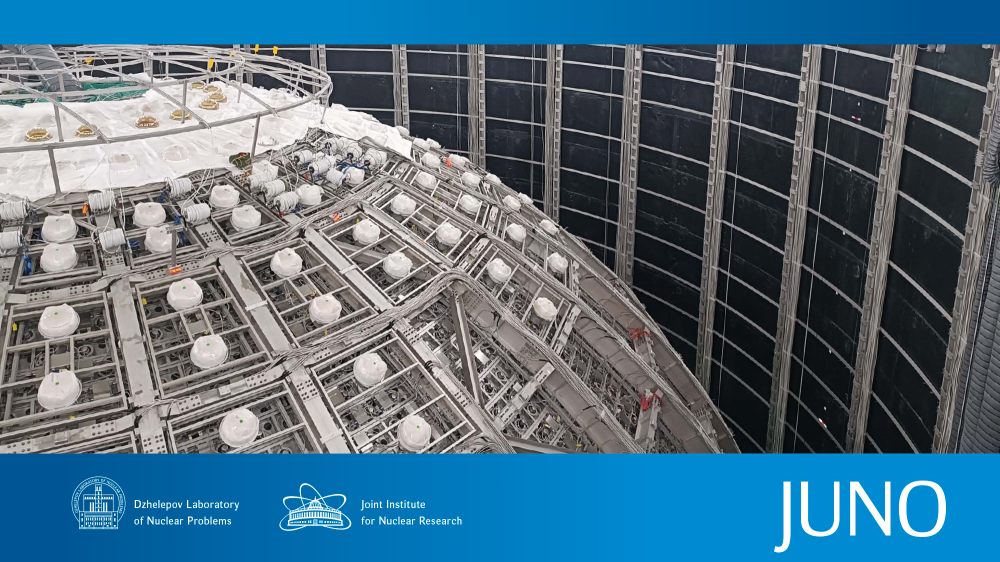
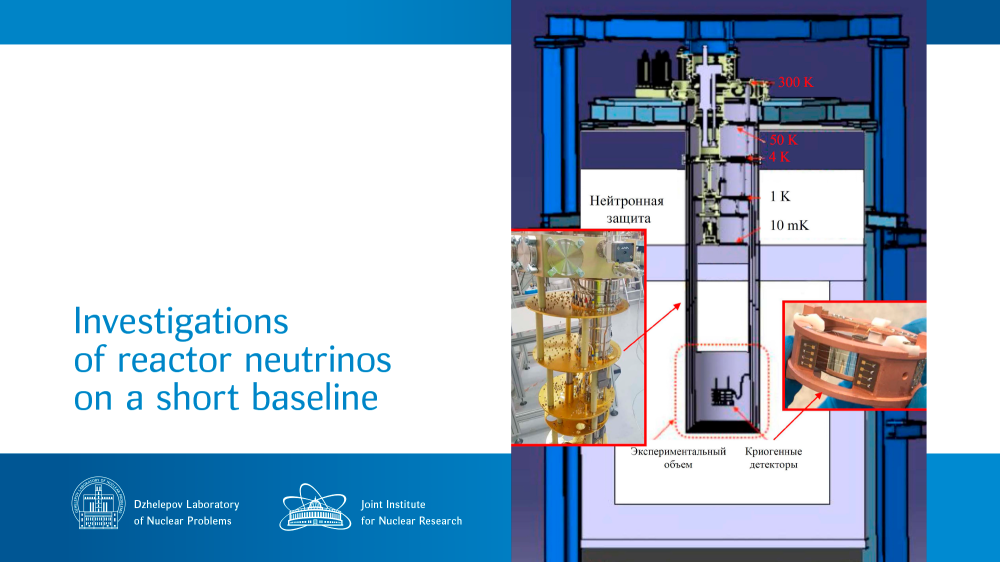
Measurement of the neutrino mass hierarchy in the long baseline reactor experiment. Precise determination of the parameters of neutrino oscillations. Study of neutrino fluxes from various sources: the Sun, The Earth and others.
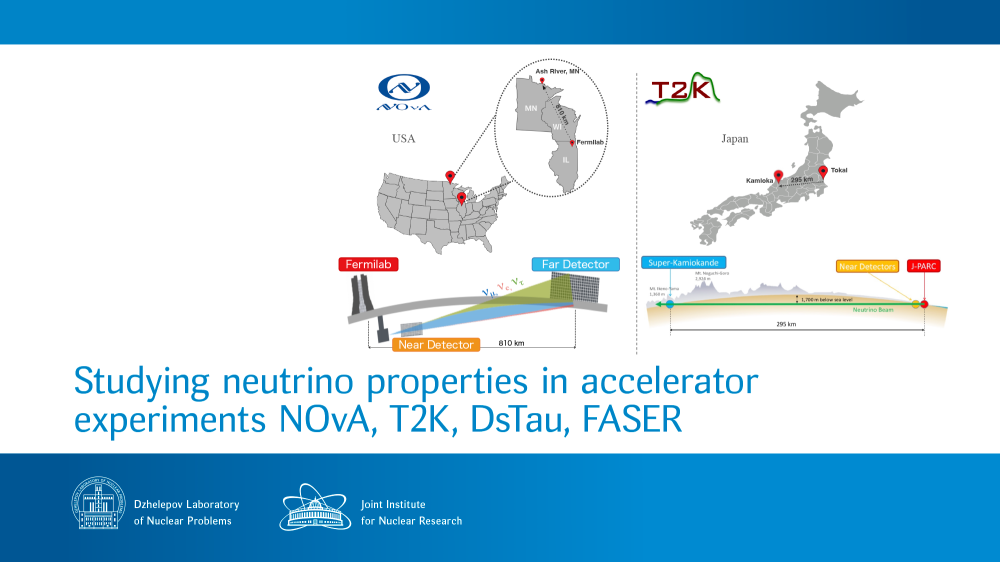
Measurement of the neutrino mass hierarchy, CP violation and other parameters of neutrino oscillations in the NOvA and T2Klong-baseline accelerator experiments. Study of tau leptons production via $D_{s}$ meson production and decay in proton-nucleus collisions at 400 GeV/c (the DsTau experiment). Study of high-energy neutrino properties in the range of ~100 GeV - 3 TeV at the LHC collider in CERN (the FASER experiment). Search for new particles and exotic reactions. Estimation of neutrino interaction cross-sections.
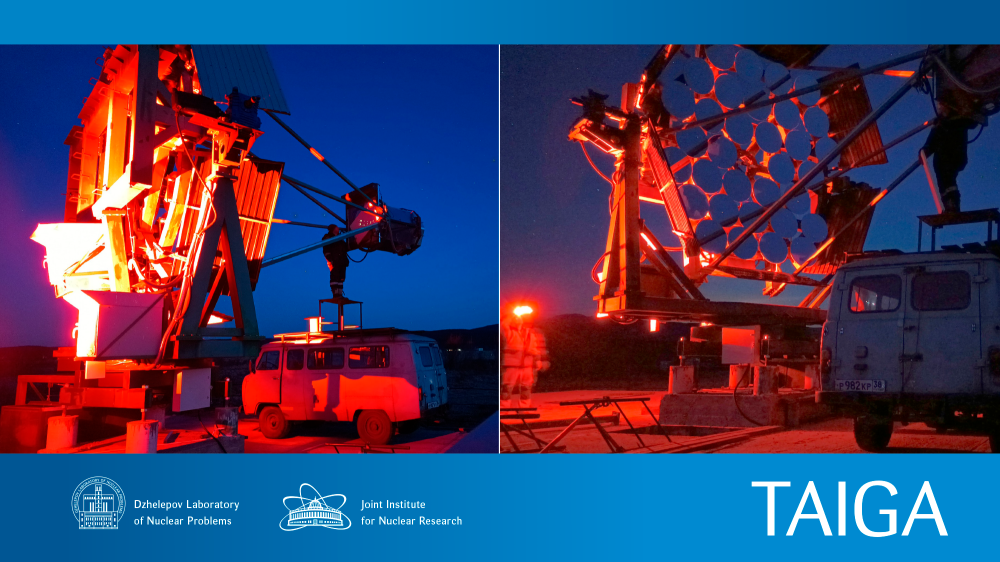
Investigation of gamma radiation and charged cosmic rays (CRs) in the energy range of $10^{13}$−$10^{18}$ eV by detecting Cherenkov radiation from extensive air showers (EAS): studying the high-energy edge of the spectrum of the brightest galactic and extragalactic sources of gamma radiation, searching for galactic PeVatrons, applying a new hybrid approach to study mass composition of CRs in the range of $10^{14}$-$10^{17}$ eV, studying of CRs anisotropy in the energy range of 100 - 3000 TeV.
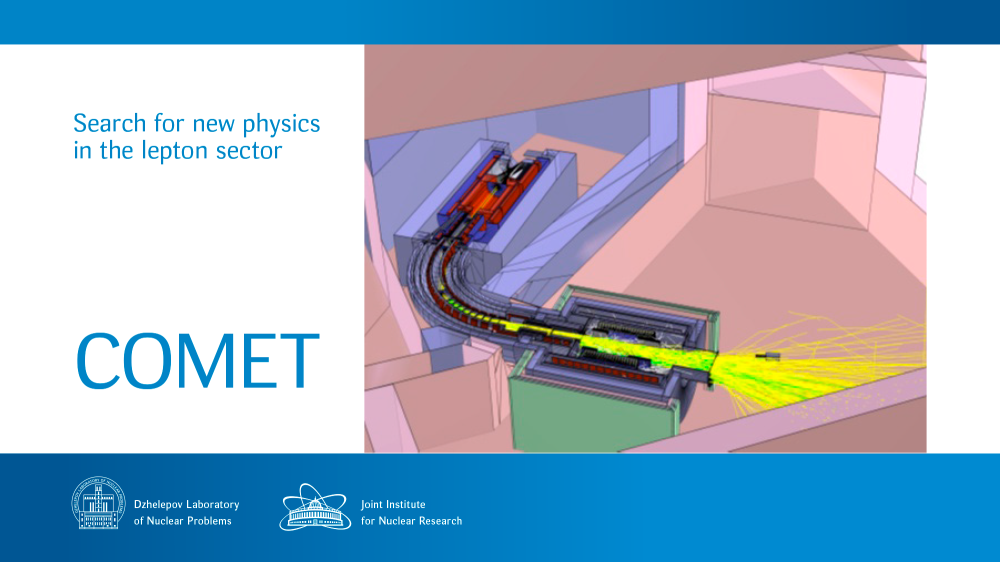
The COMET experiment seeks to measure the neutrinoless coherent transition of a muon to an electron in the field of an aluminium nucleus.