

News
05.12.2018
We congratulate Andrei Sheshukov on winning the First Prize in the category “Scientific methodological and scientific technical work” of the JINR Prize Competition for young scientists and specialists!The participants in the competition were the winners of the section sessions of the JINR AYSS conferences and schools AYSS2018, Alushta 2018, and FallingWalls LabDubna 2018.
03.12.2018
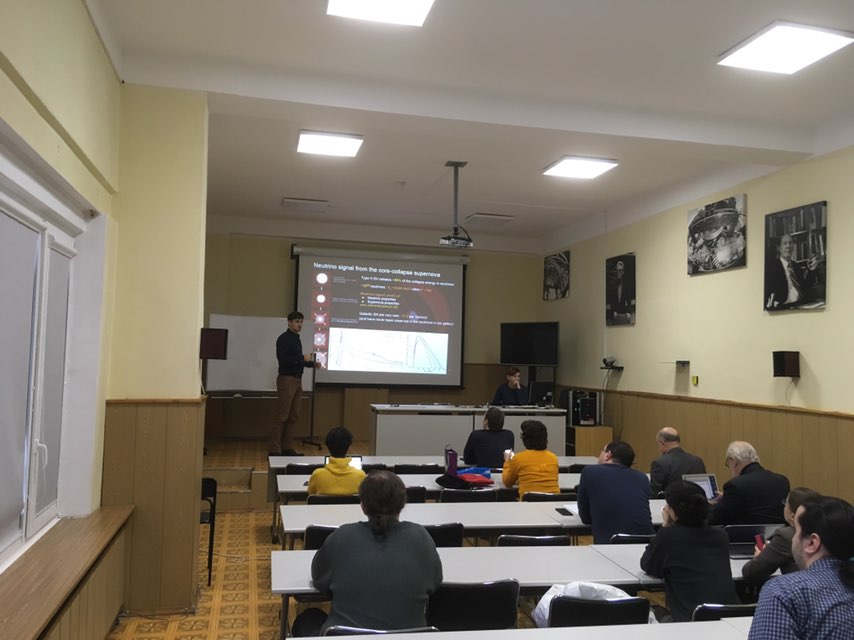
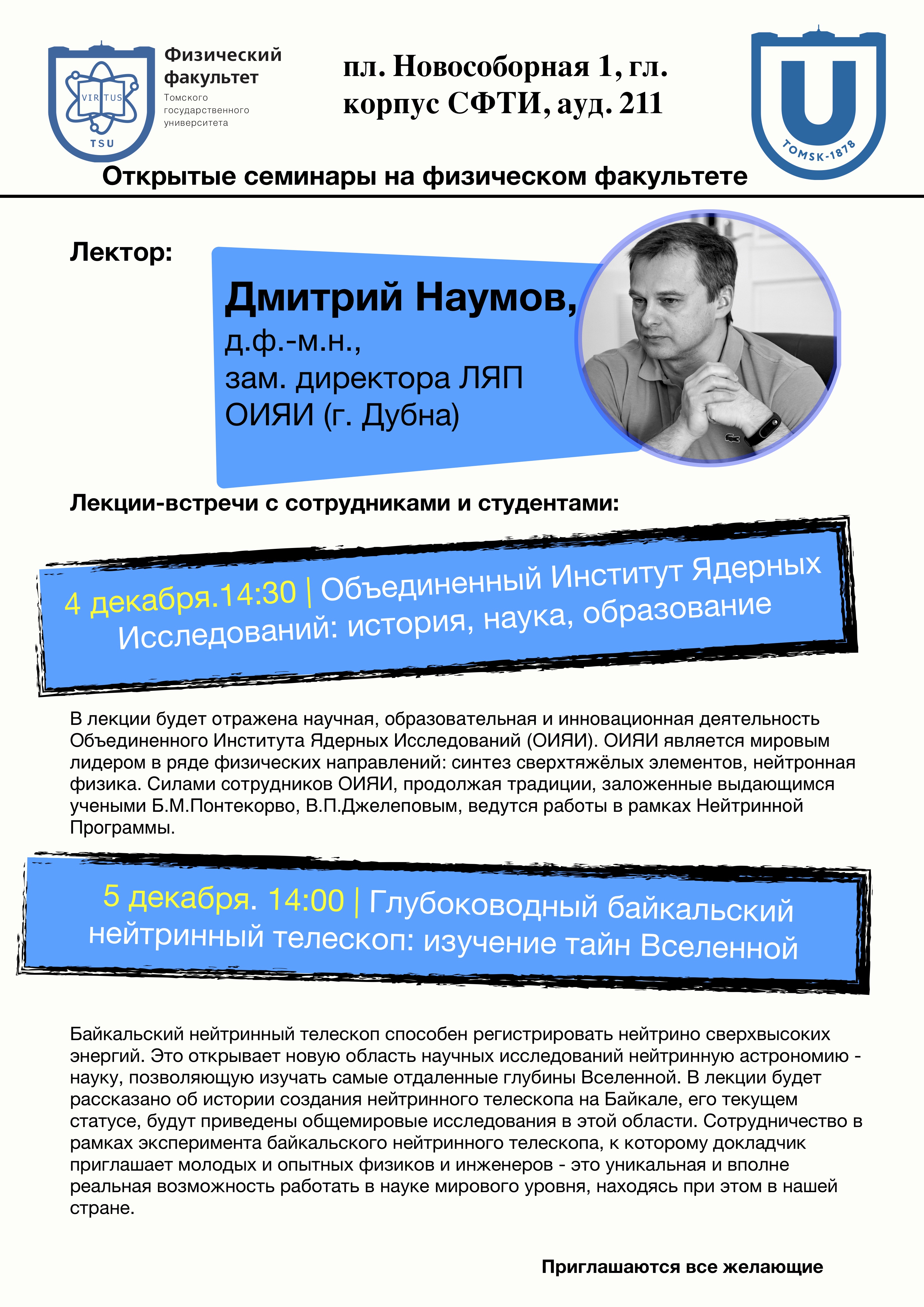
On December 4–5, 2018, D.N. Naumov will hold lecture meetings with the teaching staff and students of the Faculty of Physics at Tomsk State University.He will talk about the scientific, educational, and innovational activities of our institute, elaborating on the Neutrino Programme, especially the deep-water Baikal neutrino telescope.Collaboration within the Baikal–GVD experiment is a unique and quite real opportunity to participate in the world-class research project.
23.11.2018
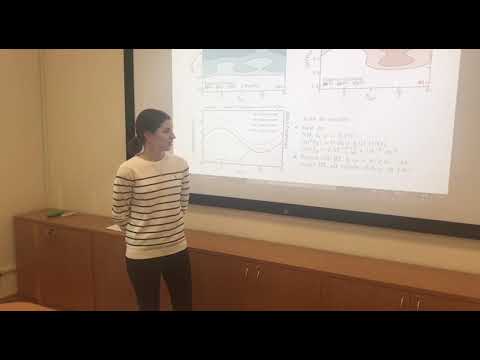
NOvA is the accelerator-based experiment located at Fermilab (USA) and designed to study neutrino oscillations (appearance of the electron neutrino and disappearance of the muon neutrino in the neutrino/antineutrino beams).It is one of the new-generation experiments with two detectors arranged at an angle of 14 mrad with the NuMI beam from the accelerator and separated by 810 km of earth formation.The primary goals of the experiment are search for CP violation in the lepton sector and measurement of the neutrino mass hierarchy and a few oscillation parameters with a better accuracy.
22.11.2018
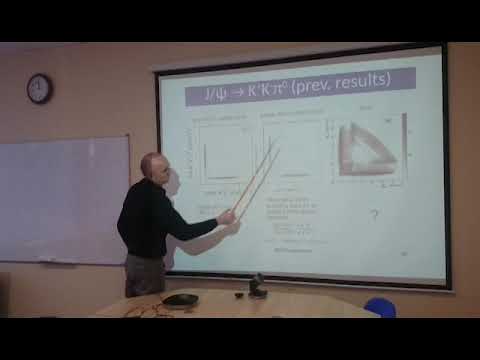
The BESIII experiment is being conducted at the BEPCII electron–positron collider with the annihilation energy of 2 to 4.6 GeV in Beijing. The collider has a record luminosity (10^33/cm^2/s) for this energy range.The collected statistics of the experimental data is 1–2 orders of magnitude higher than statistics of other experiments.The BESIII research programme is quite wide, including study of charmed particles and charmonium states, light hadron spectroscopy, tau-lepton physics, search for new physical phenomena, and a lot more.
20.11.2018
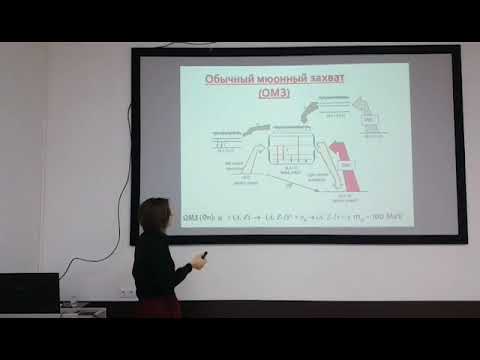
Preview of the seminar on high-energy physics and nuclear structure, 19.11.2018. Energy and time spectra of γ-radiation from the muon capture on Se, Cd, Kr, Sm, and Ti isotopes are measured using HPGe detectors.
14.11.2018
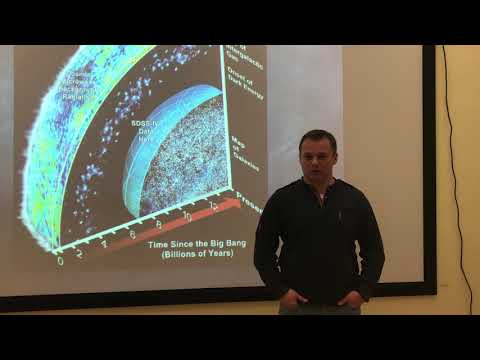
Preview of the popular-science lecture by D.V. Naumov reviewing the status of dark matter in the Universe.
08.11.2018
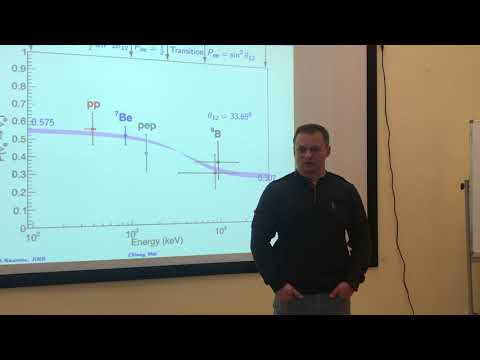
New Borexino results on measurement of solar neutrino fluxes were published in Natureon 25 October. Simultaneous spectral analysis of neutrino fluxes from the pp, Be-7, and pepreactions was performed for the first time. Unlike previous ones, this analysis was made in a wide energy range including three components of the solar neutrino spectrum.
06.11.2018
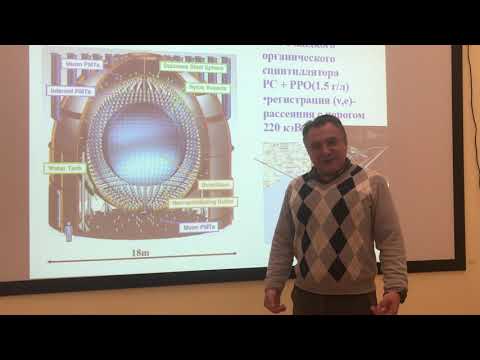
The review lecture “Solar neutrinos” by D.V. Naumov is intended for a wide audience beginning with junior students.
30.10.2018
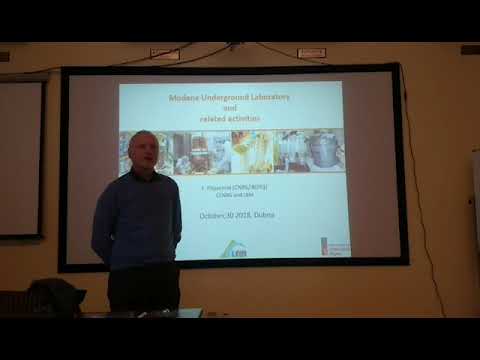
The General Laboratory Seminar on the Modane Underground Laboratoryin the Fréjus Tunnel (France) was given by Fabrice Piquemal at DLNP on 29 October 2018.
25.10.2018
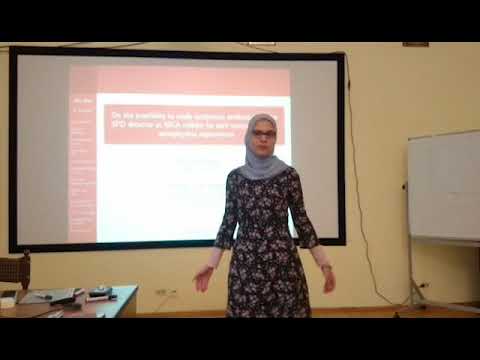
Reham El-Kholy (Cairo University, Egypt) speaks about a possibilityof studying production of antiprotons in the SPD detector at the NICAL collider for searching dark matter in astrophysical experiments.
24.10.2018
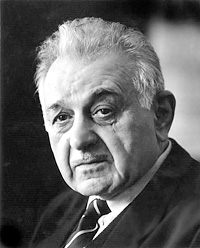
Professor Stepan Agaronovich Bunyatov, a talented scientist, outstanding organizer of science, doctor of science in physics and mathematics, passed away on 24 October 2018.
S.A. Bunyatov began working at the Laboratory of Nuclear Problems in February 1956.He defended the candidate of science dissertation in 1965and the doctoral dissertation in1977. In 1982, the title of professor was conferred on him.
His scientific interests lay in the fields of neutrino physics, charmed particle physics, interactions of π mesons and protons with nucleons and nuclei, πN→ππN reaction near the production threshold, and pion–pion interactions.
S.A. Bunyatov is a co-author of two discoveries, double π-meson charge exchange and production and decay of the nucleon-stable helium-8 nucleus, which were predicted by Ya.B. Zel’dovich.
23.10.2018
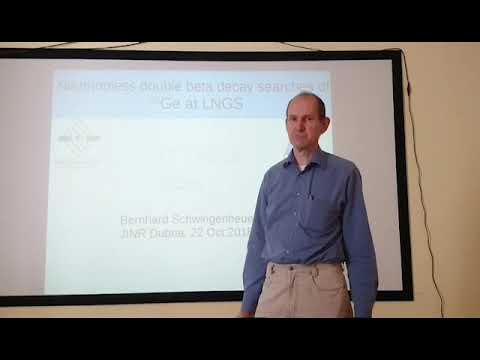
Dr. Bernhard Schwingenheuer speaks about the current status and perspectives of the LNGS experiments on the search for neutrinoless double beta decay.