

News
15.09.2021
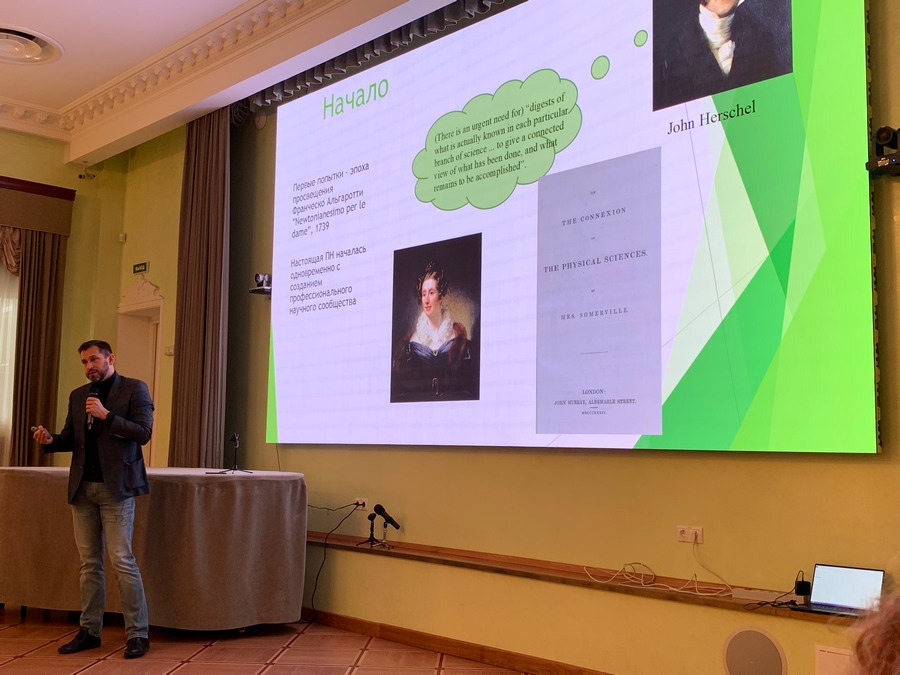
Mark Shirchenko, a senior researcher of the Dzhelepov Laboratory of Nuclear Problems, one of the translators of the sitcom “The Big Bang Theory”, took part in the workshop of the Polytechnic Museum “Mediation: Interaction with a Visitor, Science Communication”.

15.09.2021
Today, it is the 95th birthday of a renowned scientist, Doctor of Physics and Mathematics, corresponding member of the Academy of Sciences of the USSR (ASU), Sergey Mikhailovich Polikanov. In 1950, after graduating from the Moscow Engineering Physics Institute, S. M. Polikanov started his career at the Institute of Atomic Energy where he worked under the guidance of G. M. Flerov. Since 1957, the scientist continued working with G. M. Flerov at the Laboratory of Nuclear Reactions of the Joint Institute for Nuclear Research.
13.09.2021
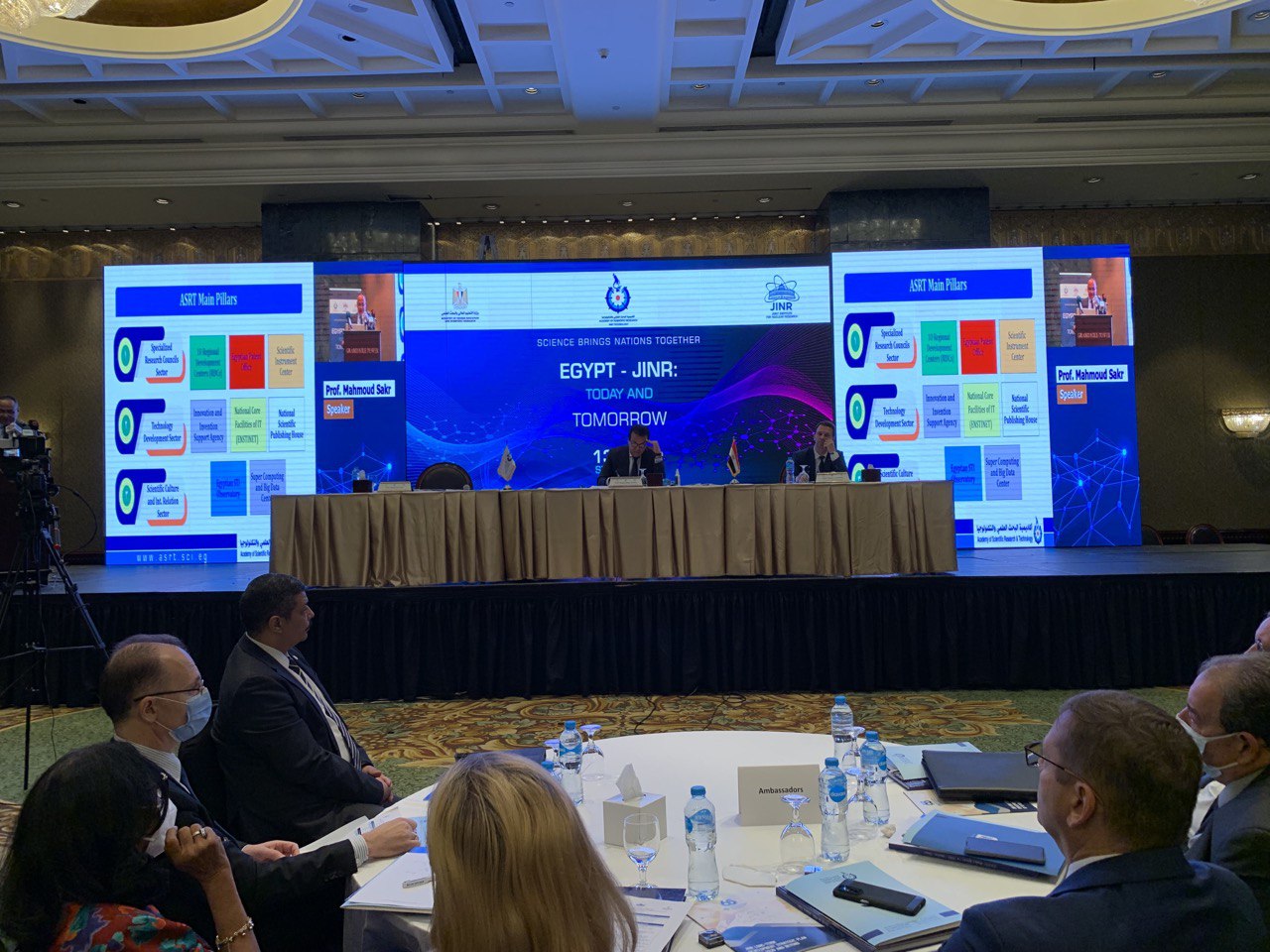
From 13 to 14 September 2021, the delegation of the Joint Institute for Nuclear Research headed by the JINR Director, Academician G. V. Trubnikov is on an official visit to Cairo. The delegation is participating in the event “Egypt—JINR: Today and Tomorrow”. Today, the Deputy Director of Science D. V. Naumov, the Head of the Experimental Department of Colliding Beams A. V. Guskov and the Head of the Sector of Molecular Genetics of the Cell E. V. Kravchenko are taking part on behalf of the Dzhelepov Laboratory of Nuclear Problems in the plenary session «Strategic Opportunities for Advancing Global Collaborative Perspectives Towards Achieving 2030 Main Research Goals».

02.09.2021
From 18 to 20 August, the Science Festival initiated by the project Homo Science of the ROSATOM Corporation took place in Nizhny Novgorod, a marathon of interactive talk shows, intellectual games, ecology workshops and concerts. The senior researcher of the Dzhelepov Laboratory of Nuclear Problems Mark Shirchenko participated in the festival. He talked in the format of the “What? Where? When?” game about science in the popular sitcom “The Big Bang Theory”.
01.09.2021
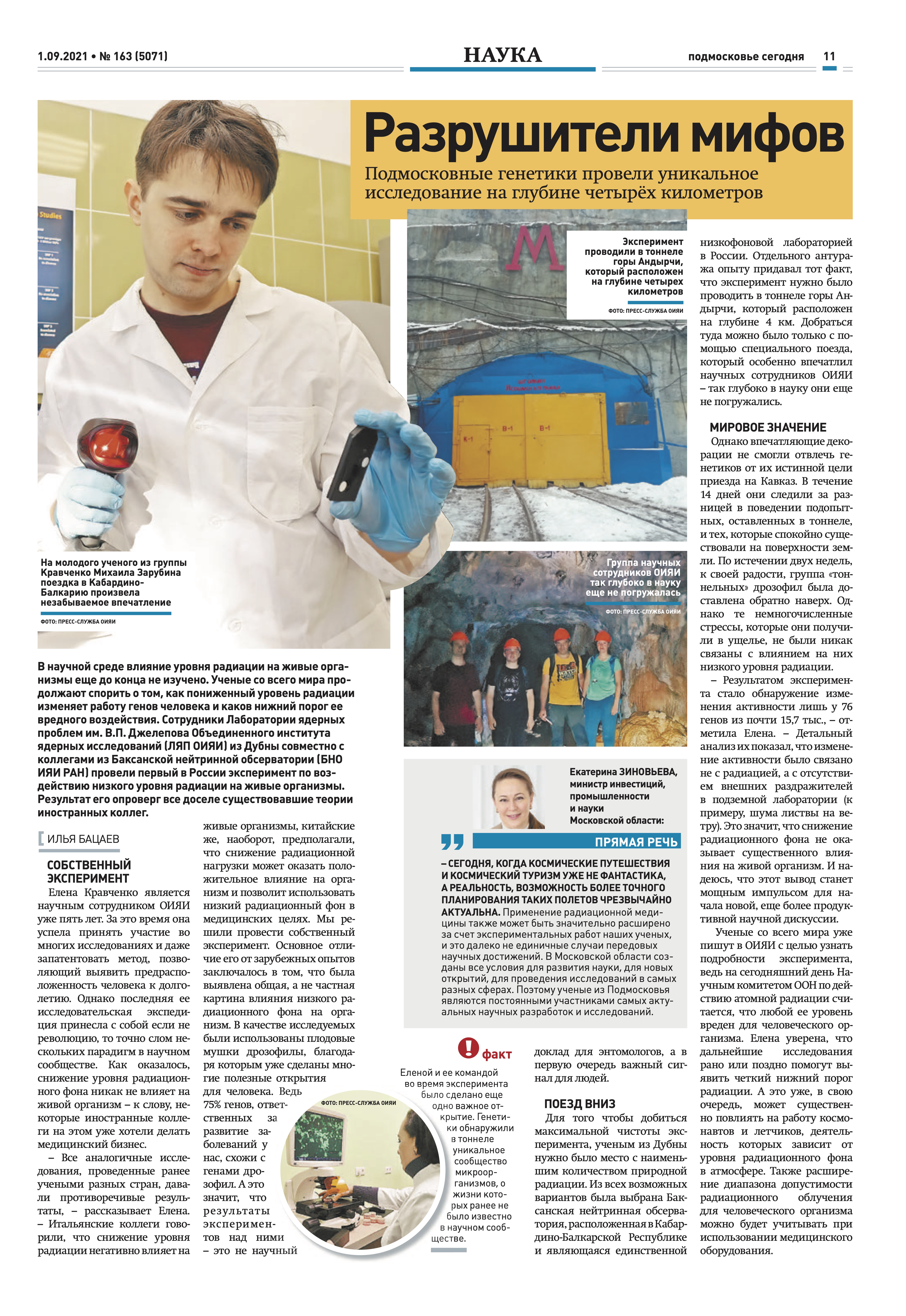
On 1 September 2021, an article about the unique study conducted by our biologists from the Sector of Molecular Genetics of the Cell, along with colleagues from the Baksan Neutrino Observatory of INR of RAS, was published in the newspaper “Podmoskovye segodnya” (No 163 (5071)). We quote the article author Ilya Batsaev, “Scientists across the world go on arguing about how a subnormal level of radiation changes activity of human genes and what is the lower threshold of its harmful impact. Researchers of the Dzhelepov Laboratory of Nuclear Problems of the Joint Institute for Nuclear Research from Dubna, together with colleagues from the Baksan Neutrino Observatory, performed the Russia’s first experiment on the impact of the low radiation level on living organisms. The result invalidates all previous theories of foreign colleagues.”
30.08.2021
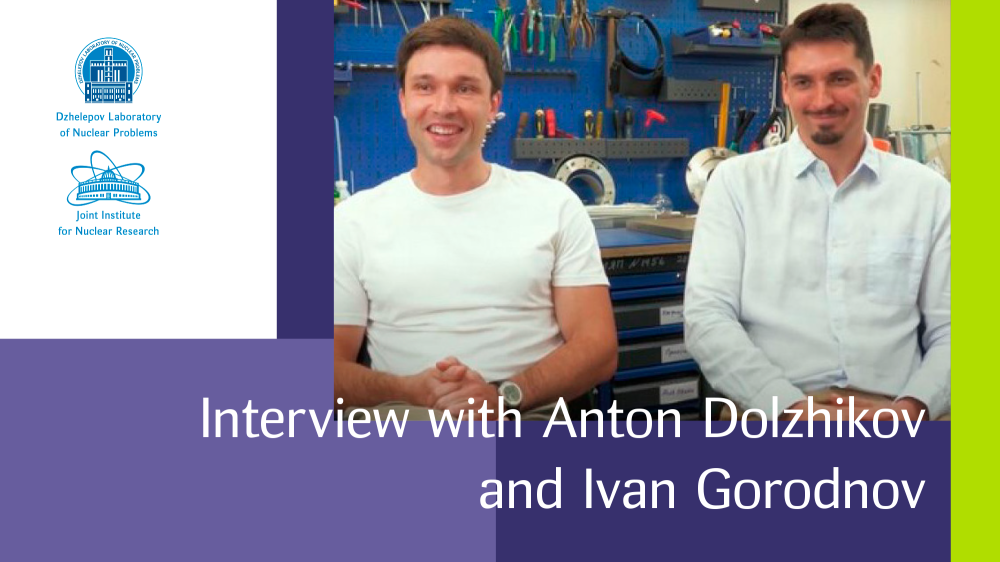
Intriguing scientific tasks, exceptional devices and participation in international projects – young researchers from the DLNP Sector of Low Temperatures, Anton Dolzhikov and Ivan Gorodnov, are talking about their work at the Dzhelepov Laboratory of Nuclear Problems and life in Dubna.
27.08.2021
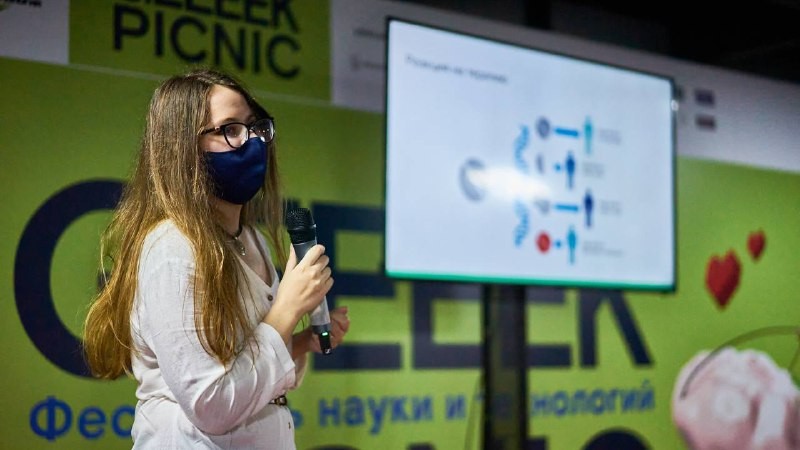
On 21 August, the next edition of GEEK PICNIC, a popular science festival, took place in Moscow. One of the lecturers of the festival was the researcher from the Sector of Molecular Genetics of the Cell of the Dzhelepov Laboratory of Nuclear Problems Anastasiya Rusakovich. She lectured together with Polina Krivykh, Vitaly Egorov, Vladimir Surdin and other notable science educators.
27.08.2021
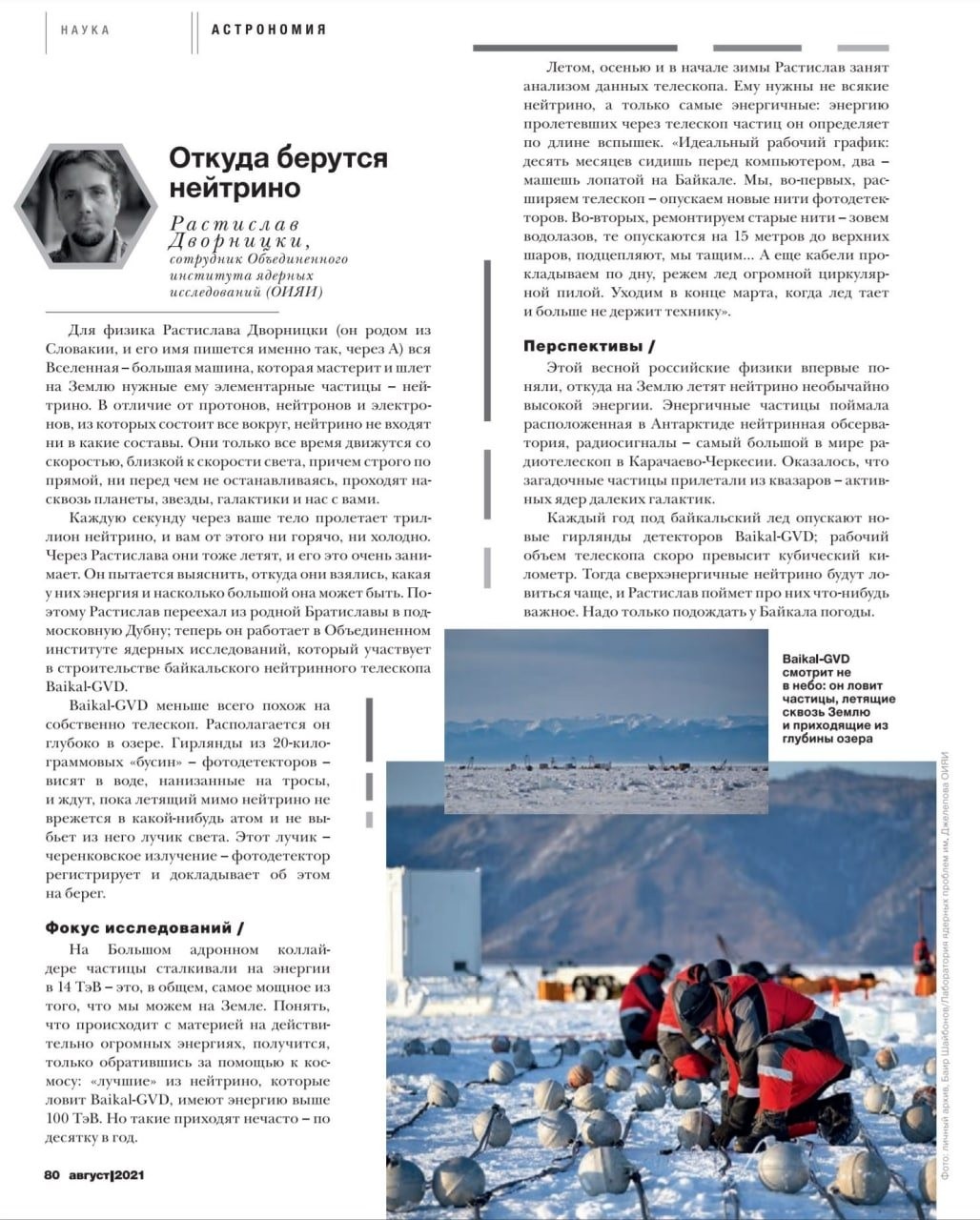
The article about the Baikal Neutrino Telescope “Where do neutrinos come from?” by the researcher of the DLNP Experimental Department of Nuclear Spectroscopy and Radiochemistry Rastislav Dvornicki was published in the Science section of the August issue of the S7 airline inflight magazine.
Rastislav describes clearly and interestingly in the short article the neutrinos’ nature and functioning of the complex physics facility. The photographs from Lake Baikal by his colleague Bair Shaybonov illustrate the subject matter.
Neutrinos and neutrino physics are one of the “hottest” topics in explaining fundamental science to the general audience. And this is mainly owing to such articles by our researchers.
25.08.2021
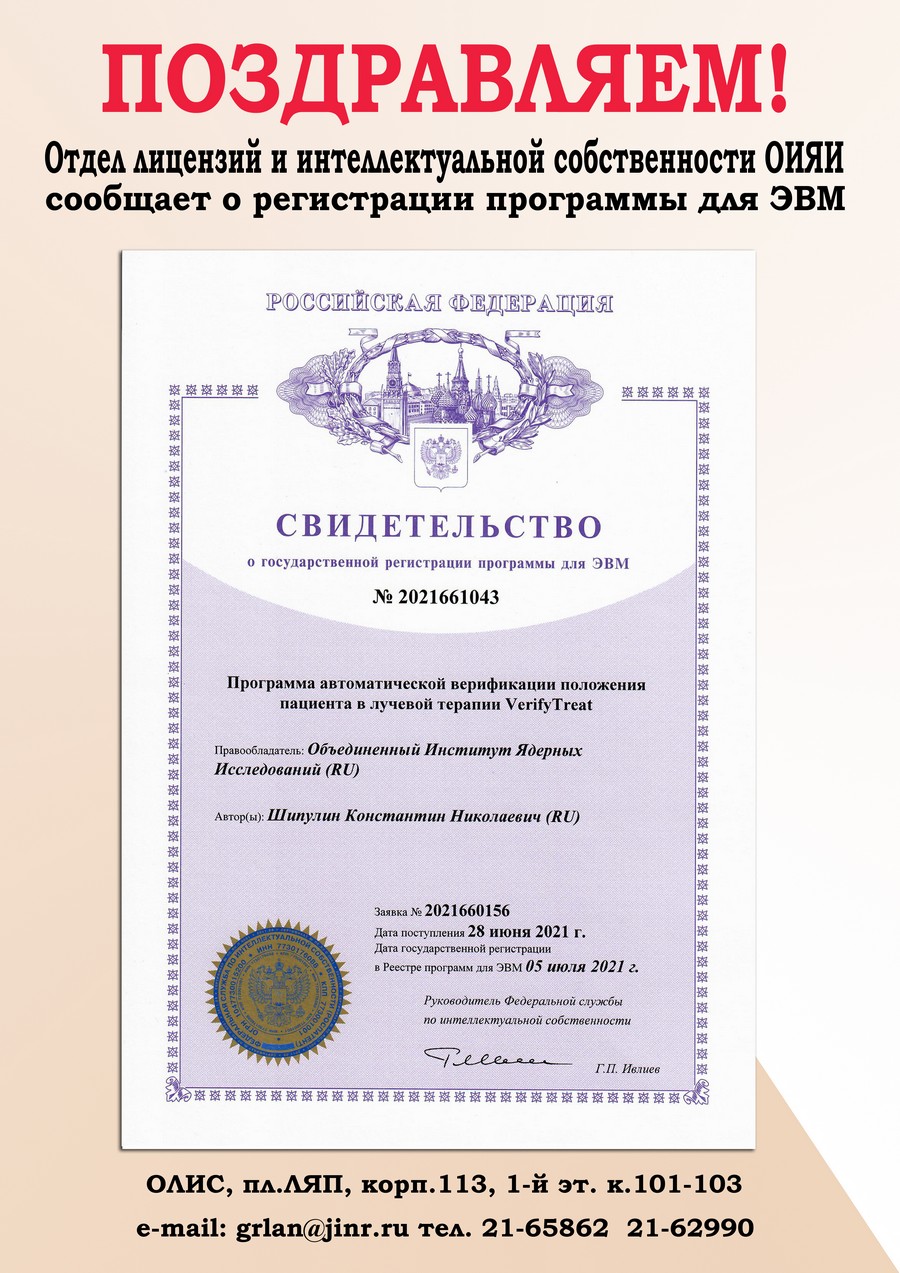
The JINR Department of Licenses and Intellectual Property announces that on 5 July 2021, the Joint Institute for Nuclear Research got a Certificate of State Registration of the software program “VerifyTreat program of automatic verification of patient’s position during beam therapy” authored by Konstantin Nikolaevich Shipulin.
25.08.2021
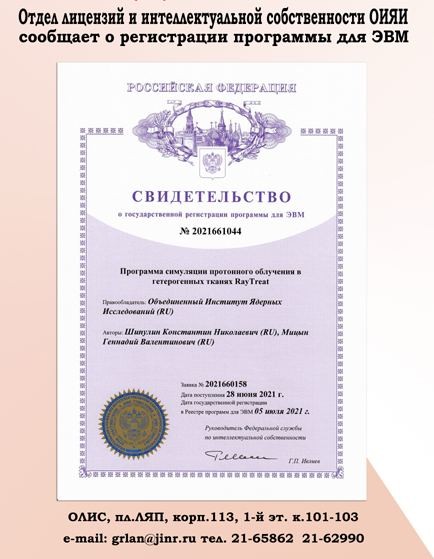
The JINR Department of Licenses and Intellectual Property announces that on 5 July 2021, the Joint Institute for Nuclear Research got a Certificate of State Registration of the software program “RayTreat program for modelling of proton irradiation in heterogeneous tissues” authored by Konstantin Nikolaevich Shipulin and Gennady Valentinovich Mitsyn.
25.08.2021
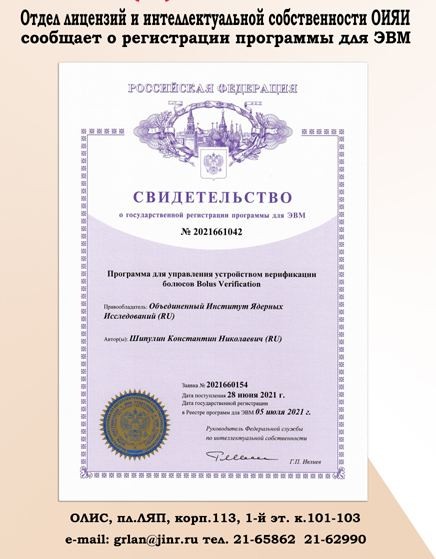
The JINR Department of Licenses and Intellectual Property announces that on 5 July 2021, the Joint Institute for Nuclear Research got a Certificate of State Registration of the software program “Bolus Verification Control Program” authored by Konstantin Nikolaevich Shipulin.
25.08.2021
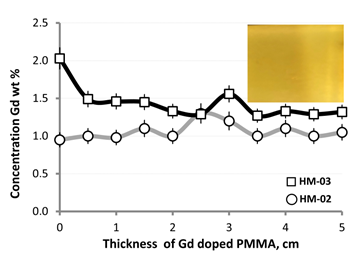
An article was published in the journal Materials about development and manufacture of a pilot batch of the ultra-low background structural material for production of new-generation detectors to search for weakly interacting dark matter particles. The material obtained on the basis of polymethylmethacrylate and rare-earth metal gadolinium almost does not produce radiation background and can slow down and efficiently absorb neutrons. The team of scientists from the Mendeleev University of Chemical Technology (MUCT), Skobeltsyn Institute of Nuclear Physics of Moscow State University (SINP of MSU), Belgorod State University (BSU) and Dzhelepov Laboratory of Nuclear Problems (DLNP) has dealt with the task for several years. The research was performed within the international DarkSide-20k experiment, one of the largest projects on the dark matter particle search. The detector is due to start its operation in the underground low-background laboratory Gran Sasso in Italy in 2025−2026.