Future nuclear professionals: three fields of modern nuclear science

The nuclear industry is not limited to power reactors; it is a vast ecosystem encompassing both fundamental and applied research. Advanced tracking detectors for discovering new particles, radiopharmaceuticals for high-precision cancer treatment, and non-destructive neutron testing of industrial products are the key areas defining technological independence and the future of the sector today.
Kazakhstani scientists working at the Joint Institute for Nuclear Research (JINR), an international intergovernmental scientific research organization located in Dubna, shared insights into the scientific challenges researchers are tackling and the competencies the next generation of specialists needs to master.
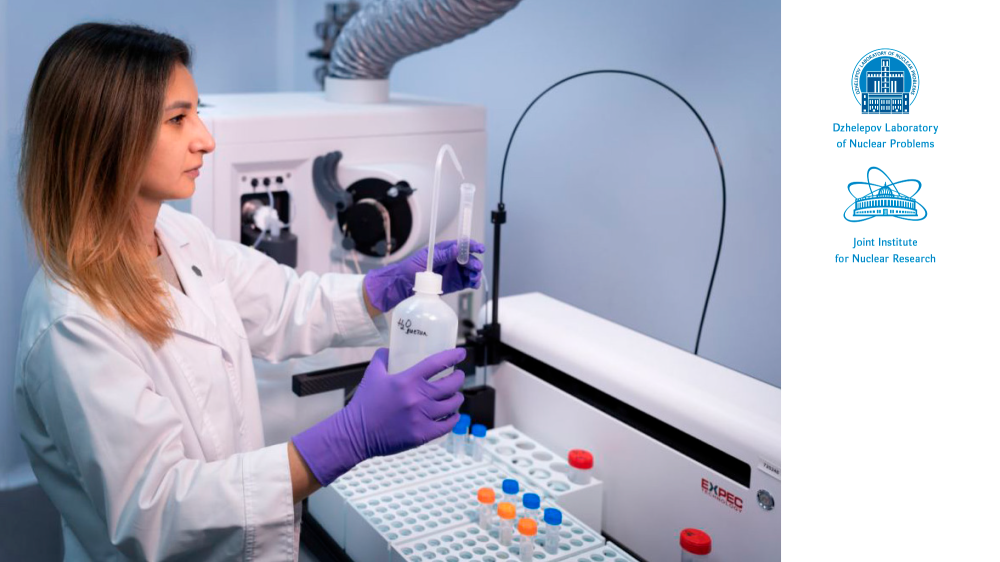
Ayagoz Baimukhanova
Ayagoz Baimukhanova is a candidate of sciences (chemistry). She serves as the Deputy Director for Science at the Dzhelepov Laboratory of Nuclear Problems of the Joint Institute for Nuclear Research (JINR, Dubna).
The main focus of her scientific research is the development of radiopharmaceuticals. Her candidate dissertation was dedicated to the production of radionuclides for nuclear medicine.
In addition to her research, she is actively involved in science popularization and regularly participates in educational projects dedicated to the achievements of scientists and modern nuclear science.
1. What are radiopharmaceuticals, and how are they used in modern medicine?
Radiopharmaceuticals are a special class of drugs containing radionuclides. Their unique feature is that they work in two ways at once: they help detect a disease and can also treat it. This is possible because a radioactive label, combined with a biological vector, a molecule, selectively binds to tumor cells. Being a part of this drug, the radionuclide accumulates in pathological lesions, and its radiation is detected by specialized equipment that maps the distribution of radioactivity in the body. If a therapeutic radionuclide – such as an alpha- or beta-emitter – is used instead of a diagnostic one, it can destroy targeted cells without harming healthy tissue. This approach is called theranostics, a combination of therapy and diagnostics. Today, these drugs are increasingly used in oncology, enabling early tumor detection and targeted treatment.
2. Why is the production of therapeutic radionuclides important for cancer treatment?
Today, diagnostic nuclear medicine is a well-established, streamlined industry. Routine radiopharmaceuticals based on 18F are used for positron emission tomography, while those based on 99mTc are used for single-photon emission computed tomography. Both 18F and 99mTc are produced at the Institute of Nuclear Physics in Kazakhstan as well. This is a reliable, proven tool that enables physicians to detect tumors, assess their spread, and monitor treatment effectiveness.
However, when it comes to therapy, the picture is entirely different. Only a few therapeutic radiopharmaceuticals are approved worldwide, based on 90Y, 177Lu, 223Ra, and 225Ac. They are scarce, expensive, and fail to meet all the needs of oncology. At the same time, the demand for effective therapy is immense: cancer remains one of the leading causes of mortality, and metastases and resistant tumors often do not respond to traditional treatments. Therefore, the development of therapeutic radionuclides is a key challenge in modern nuclear medicine.
Auger emitters hold a special place here. In my view, they represent the potential future of nuclear medicine. If such a radionuclide is delivered directly into the cell nucleus, it can effectively damage DNA and trigger tumor cell death while leaving neighboring healthy tissues virtually untouched. This makes Auger therapy ideal for targeting single cancer cells and micrometastases.
However, there is a serious challenge: there are still no effective biological vectors for Auger emitters which are capable of delivering the radionuclide directly into the cell nucleus. Most existing vectors – such as antibodies and peptides – lead to accumulation in the cytoplasm or on the cell surface, whereas for Auger therapy, reaching the nucleus is critical. This is a distinct, evolving field, and progress in it will pave the way for the clinical application of Auger radionuclides. Even now, it is clear that this direction holds great promise. At the Institute of Nuclear Physics, we are developing methods for producing Auger-emitting radionuclides, such as 107Cd, while simultaneously searching for suitable vectors. I am confident that in the coming years, Auger therapy could become a breakthrough in cancer treatment.
3. What specialists are involved in the development and application of radiopharmaceuticals?
The creation and application of radiopharmaceuticals is a team effort where each specialist solves a specific task. Radiochemists focus on the production and separation of radionuclides, as well as their chemical binding to biological molecules. Nuclear physicists ensure the operation of accelerators and reactors where radionuclides are produced. Organic chemists synthesize vectors, the molecules that deliver the radioactive label to the tumor. Radiobiologists study how different types of radiation affect cells and tissues, what mechanisms of tumor cell damage and death are triggered, and how to increase therapy effectiveness without harming healthy tissues. Engineers develop equipment for generators and automated synthesis systems. Oncologists use the drugs to diagnose and treat patients, while medical physicists are responsible for dosimetry and safety. Without the coordinated work of all these specialists, the creation and use of radiopharmaceuticals would be impossible.
4. What path can a young scientist take if they want to pursue a career in nuclear medicine?
First of all, it is necessary to get a fundamental education in nuclear physics and radiochemistry. It is important not only to master the theory, but also to find practical applications for that knowledge. I myself came into radiochemistry from nuclear physics and realized that what specifically attracts me is the production of medical radionuclides. Next, one should look for opportunities to work at research centers with access to accelerators, reactors, and modern laboratories. You need to develop perseverance, because science often involves routine work and setbacks, after which it is vital to get back up and try again. And, of course, do not be afraid to ask questions and learn from those already working in the field. My own path led me to become the first female scientist from Kazakhstan elected to the position of Deputy Director for Science at the Laboratory of Nuclear Problems of the Joint Institute for Nuclear Research. This shows that with perseverance and a love for science, one can reach the highest positions.
5. Why is it important for scientists to talk to the public about their work in plain language?
Because science shouldn't remain in an ivory tower. When scientists explain their work in simple terms, it breaks down stereotypes, for example, that science is only accessible to a select few or that it is exclusively a male profession. Such conversations inspire young people to choose scientific careers. Furthermore, openness helps the public understand that research is aimed at solving real-world problems, such as fighting cancer. This builds trust and shows that science is not about weapons, but about hope and saving lives. And the personal example of a scientist who balances complex work with everyday life is also very important.