

News

01.07.2022
About half of readers in Russia prefer printed books to e-books. A habit, pleasant tactile sensation, convenience (one can dog ear pages, underline phrases, read in a plane) ― these are the reasons of the evergreen popularity of printed books. What is more, with e-books one cannot swap books as a part of a bookcrossing community.

30.06.2022
On Friday, 17 June 2022, the exhibition “Science in Comic Strips: an Easy Way to Explain Complicated Things” was opened at the JINR Universal Library. The organizers talked about an art experiment of the Dzhelepov Laboratory of Nuclear Problems on educational visualization of its investigations.
29.06.2022
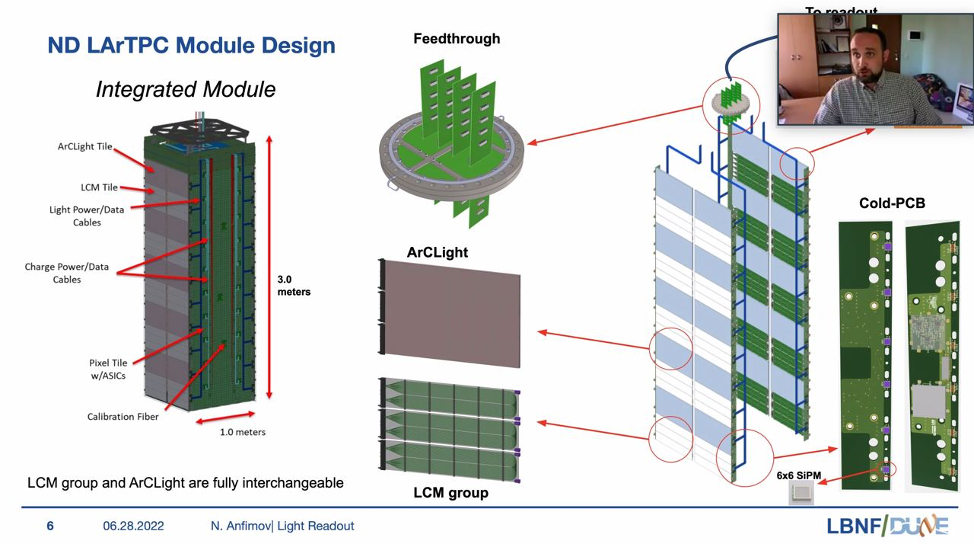
On Wednesday, 29 June 2022, the next important stage in the preparation of the project of the liquid-argon system of the Near Detector (ND-LAr DUNE) was completed, namely, the Preliminary Design Review (PDR) was successfully passed.
It took two years to approach this stage: in 2020, the detector concept had to be approved, and in 2021―2022, the system readiness tested within the ND-LAr consortium, and the cost of works agreed upon.

28.06.2022
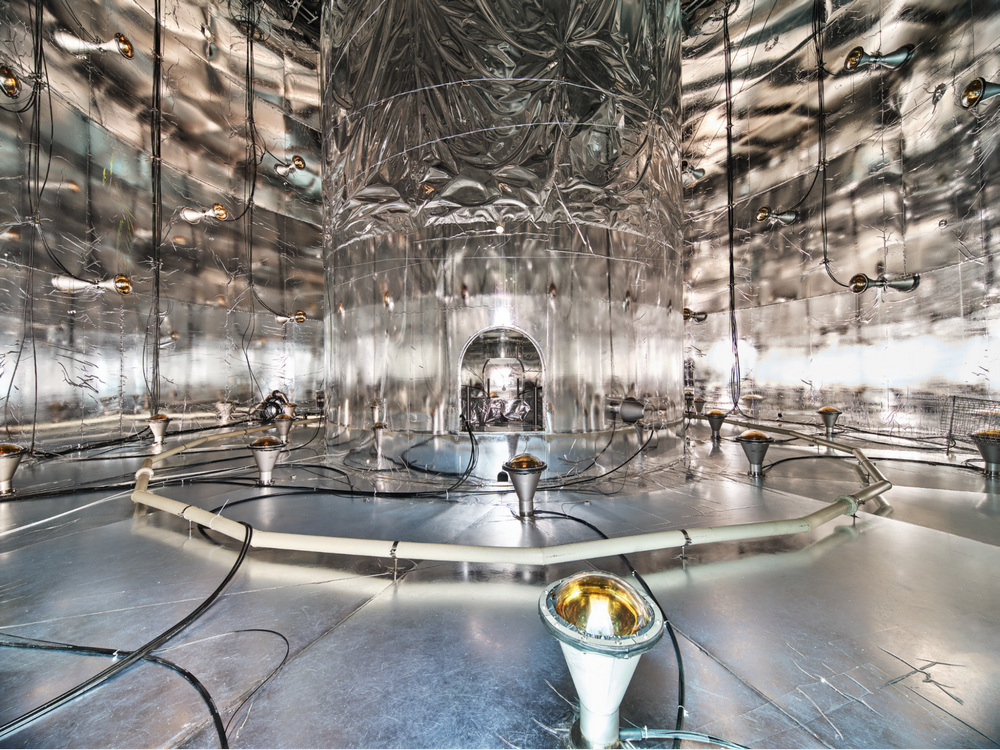
In this video, the first strings of detectors of enriched Ge-76 are being assembled in parallel at the LEGEND facility in Gran Sasso, Italy. Specialists of the Dzhelepov Laboratory of Nuclear Problems, LEGEND collaborators, assembled detector strings and manufactured high-purity nylon shrouds used to reduce the radiative background of the experiment. The complete system of the active argon veto, developed and manufactured by the joint team of scientists from JINR and the Technical University of Munich, was mounted. The automated detector assembly system was developed, transported to the Gran Sasso Laboratory and installed there by DLNP scientists.
27.06.2022
Despite objective difficulties, DLNP JINR scientists took a decisive part in the installation of the first 60 kg of detectors of enriched Ge-76 in the LEGEND setup located at the Gran Sasso National Laboratory (Italy). In addition to the direct assembling of detector strings, our specialists fabricated high-purity nylon mini-shrouds used to reduce the radioactive background of the experiment and for the first time performed the installation of the complete liquid argon instrumentation, developed and created by a joint team of scientists from JINR and the Technical University of Munich.

21.06.2022
Today, on 22 June, it is the 95th anniversary of the birthday of Doctor of Physics and Mathematics, professor Lev Iosifovich Lapidus.
L. I. Lapidus came to Dubna after graduating from MEPhI in 1950. He became one of those remarkable representatives of the first wave of physicists who promoted science establishing the Laboratory of Nuclear Problems of the Joint Institute for Nuclear Research.

14.06.2022
How to explain basic research in a trustworthy and scientifically accurate way using a comic strip of five pictures?
On Friday, 17 June, the exhibition “Science in Comic Strips: an Easy Way to Explain Complicated Things” will be opened at the JINR Universal Library. The organizers will be talking about an art experiment of our Laboratory on educational visualization of its investigations.
01.06.2022
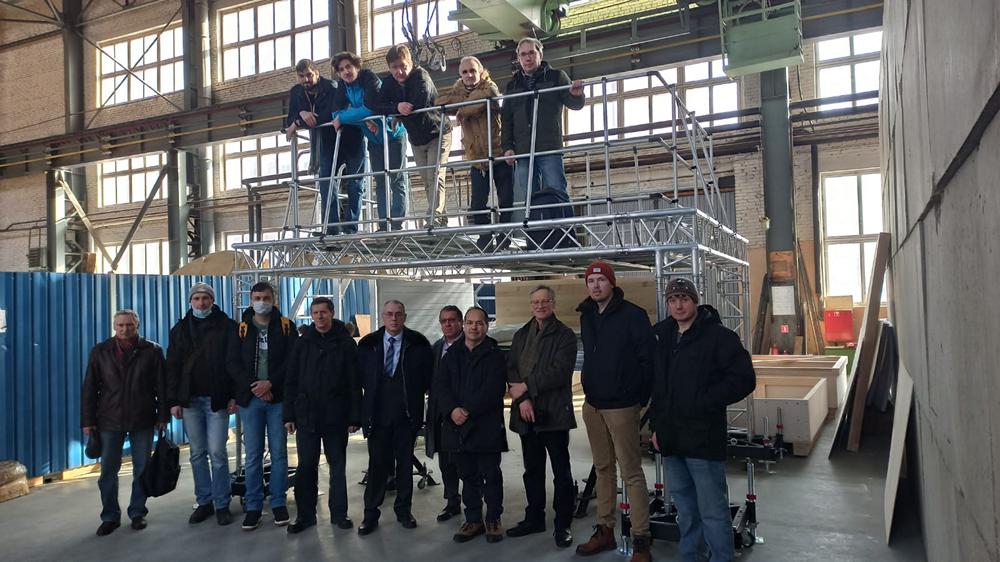
Staff members at the DLNP Design Department (DD), along with the DLNP Experimental Department of Multiple Hadronic Processes (EDMHP), have manufactured the equipment for assembling the active target (new SuperFGD type) of the Near Detector ND280 in the T2K experiment (the project was approved by the JINR Programme Advisory Committee on Particle Physics in June 2021). The unique SuperFGD target comprises about two million scintillation cubes pierced in three directions by fibers spaced one centimetre. Young specialists at the DLNP Design Department conceived and compiled under the guidance of Nikolay Vasilevich Kirichkov a requirements specification where they put together all the possible parameters of designing the assembly equipment for the target of this kind. One of those who significantly contributed to the manufacture was Andrey Vladimirovich Shaykovsky, the head of the DD Group of Electrophysical Equipment.
01.06.2022
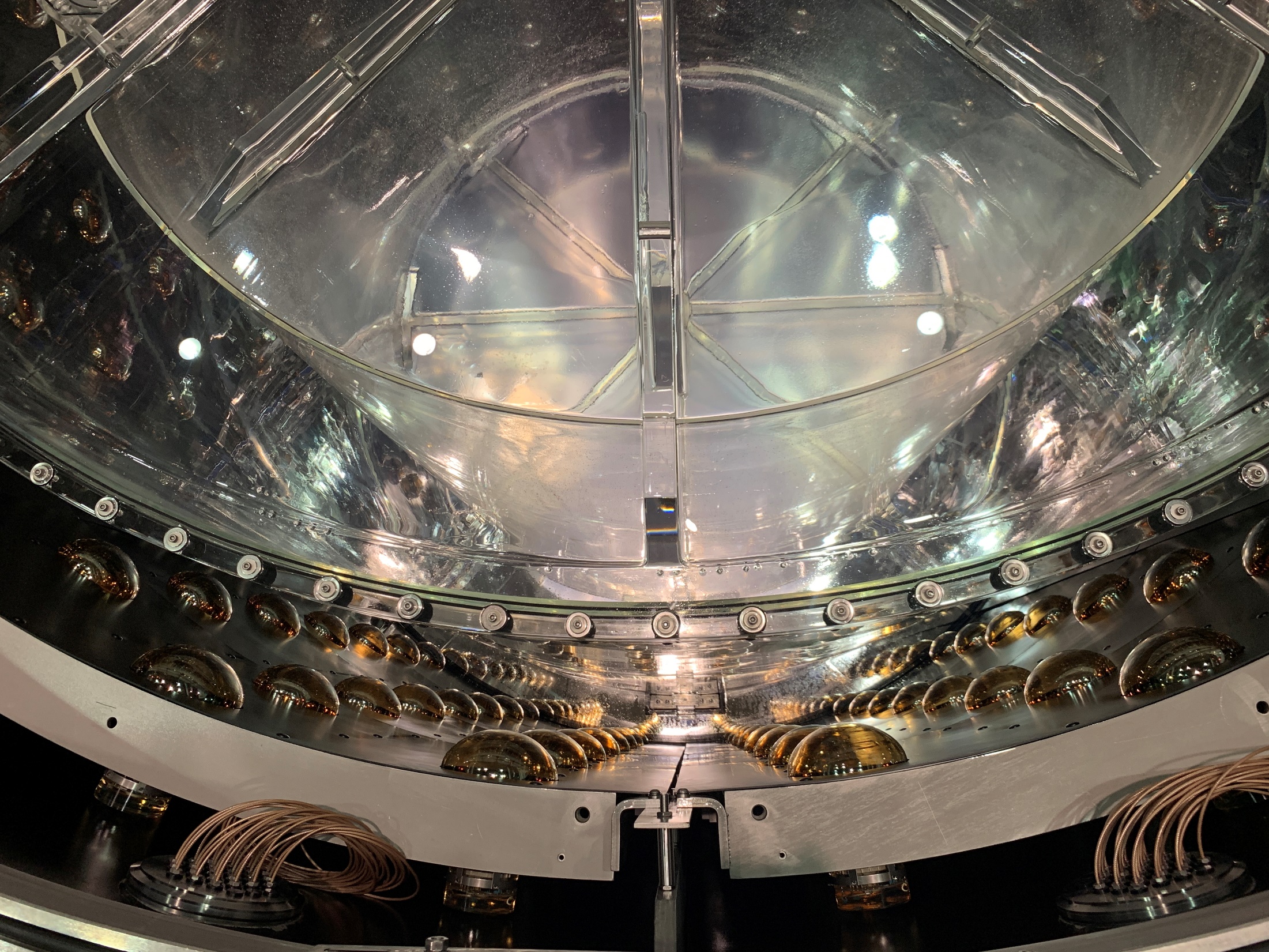
The Daya Bay Reactor Neutrino Experiment has produced the most precise measurement yet of θ₁₃, a key parameter for understanding how neutrinos change their “flavor”.
23.05.2022
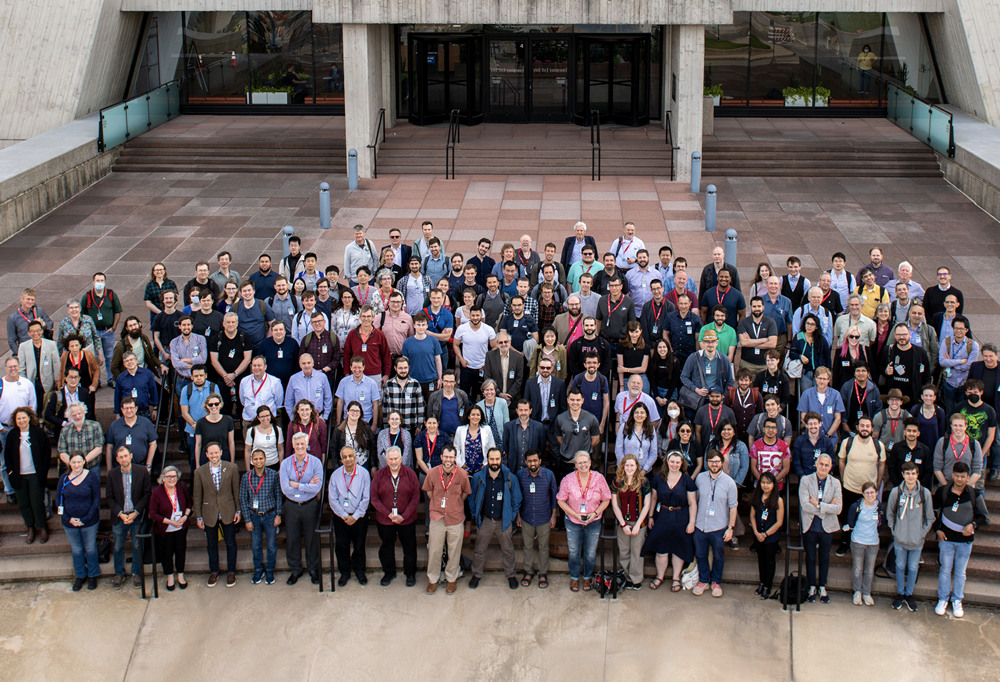
From 16 to 20 May 2022, for the first time after the coronavirus pandemic, the in-person meeting of the DUNE collaboration was held at the Fermi National Accelerator Laboratory (Fermilab, the US).

23.05.2022
“It has long been known that there are ultrahigh-energy neutrinos coming to us from space. However, it is the first time we have succeeded in linking them to galactic nuclei, blazars”, Valery Rubakov, the chief researcher of the Institute for Nuclear Research of the Russian Academy of Sciences (INR of RAS), academician of RAS, talked about the main results of the project “Neutrino and particle astrophysics”.
20.05.2022
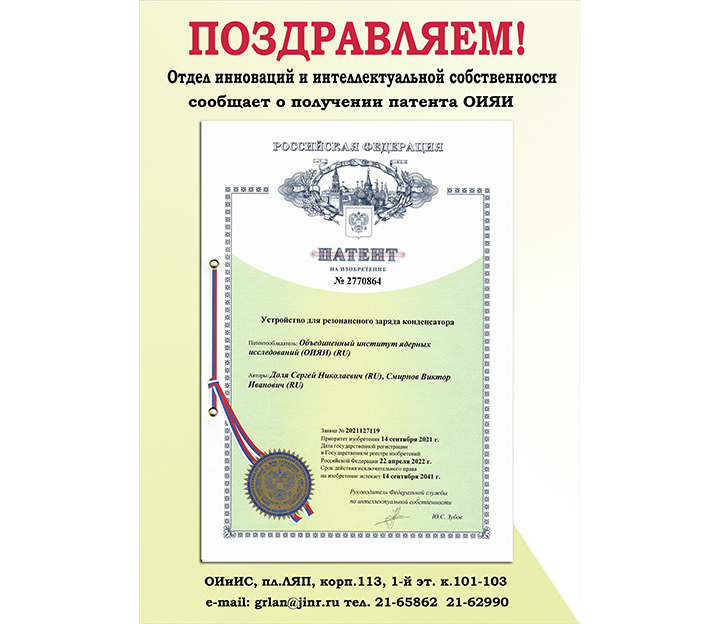
The JINR Department of Licenses and Intellectual Property announces that on 22 April 2022, the Joint Institute for Nuclear Research received a patent for the invention “Resonant capacitor charger”. The authors are Sergey Nikolaevich Dolya and Viktor Ivanovich Smirnov. We congratulate our colleagues on being granted the patent!