Joint Institute for Nuclear Research

75th anniversary

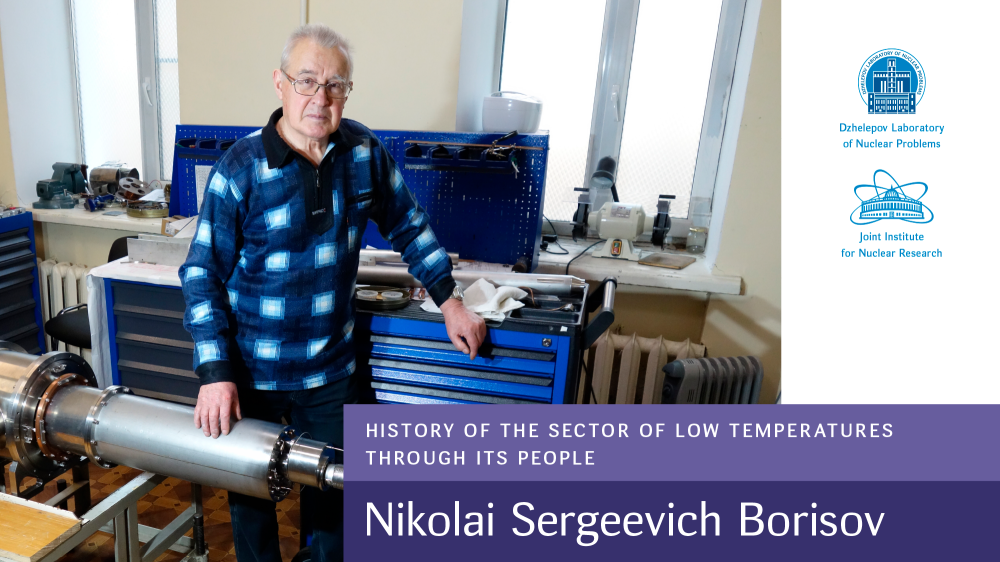
Nikolai Sergeevich Borisov began working at JINR in 1966, after graduating from Moscow State University. During his time at the Laboratory of Nuclear Problems, Nikolai Sergeevich became a highly qualified word-class scientific researcher, capable of independently solving complex scientific-methodological and technical tasks in the field of developing and creating state-of-the-art nuclear research equipment – polarized proton and deuteron targets of "frozen" type.
28.01.2025
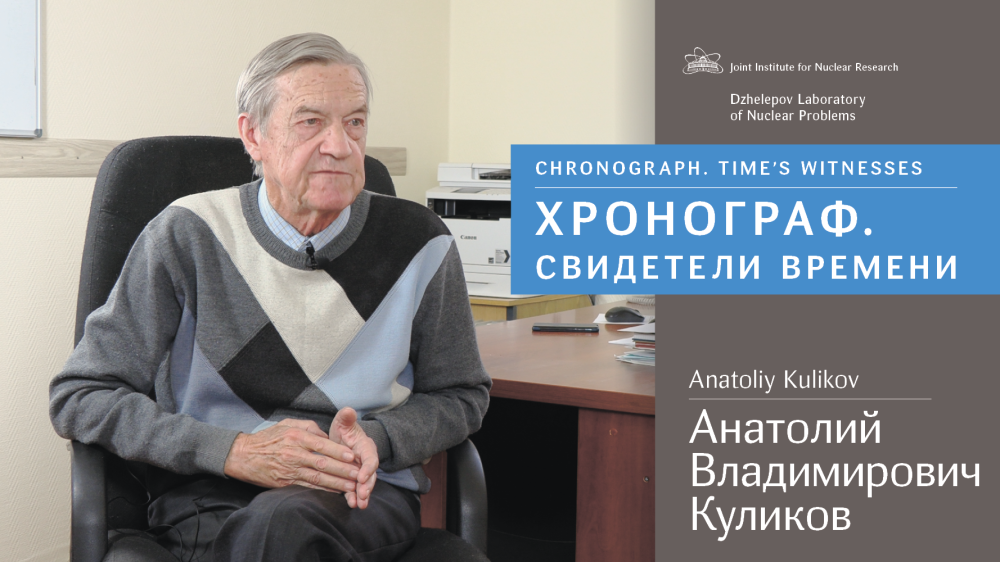
Interview with Anatoly Vladimirovich Kulikov, Doctor of Science (Physics and Mathematics), Adviser of the DLNP Directorate.
28.09.2022
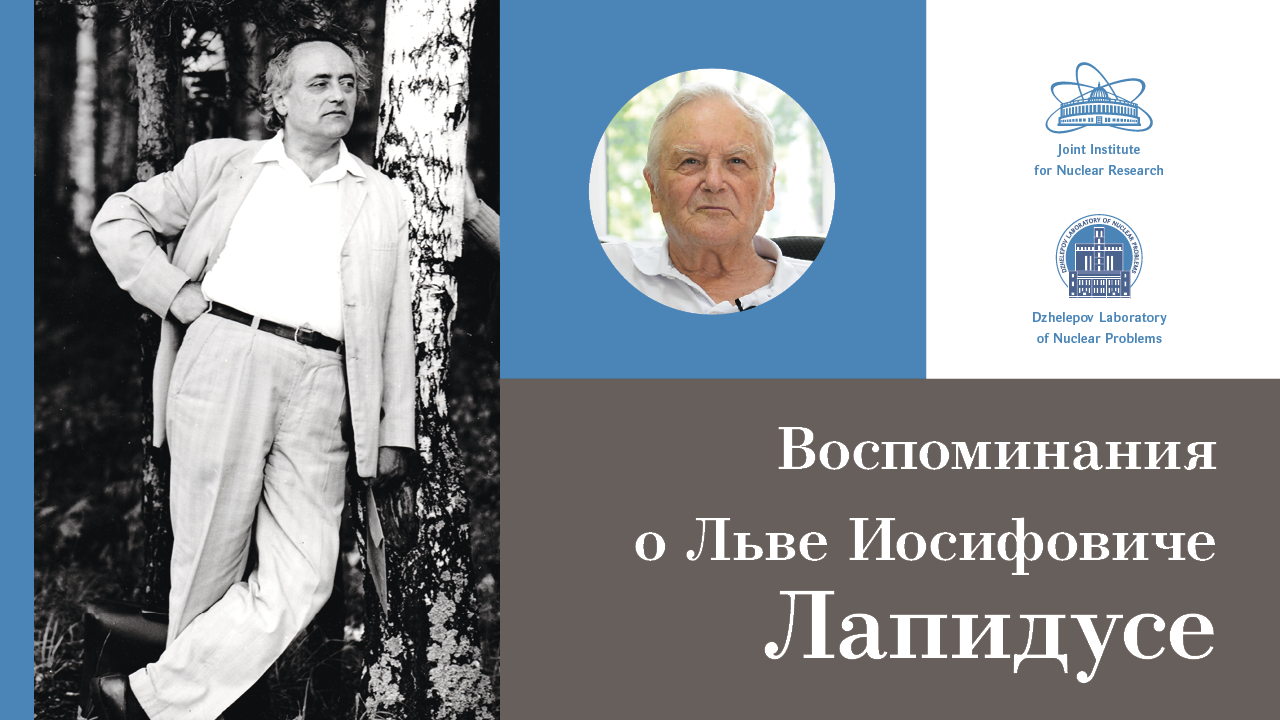
Follow-up memoires written by Vladimir Ivanovich Komarov were added to the section on our website devoted to Lev Iosifovich Lapidus. “Once, Lev Iosifovich said to me, ‘Physics is conventionally divided into experimental and theoretical physics, but nowadays another physics appeared as well – administrative physics.’ I agreed. From that time on, administrative physics evolved faster than the others, and its scale increased to the cubic power, enormously. And now I would say that we should also distinguish between administrative and organizational physics.”
26.12.2021
The leading researcher of the Dzhelepov Laboratory of Nuclear Problems G. A. Chelkov has shared his memories about Aleksei Alekseevich Tyapkin. Today, it is the 95th birthday of A. A. Tyapkin. We go on commemorating him along with his colleagues and family.
26.12.2021
Academician Yuri Tsolakovich Oganessian has shared his memories about Aleksei Alekseevich Tyapkin. — In 1953, after my third year at MEPhI, I was sent to the Hydroengineering Laboratory, a secret physics laboratory in Dubna, to get some work experience. I was trained at the Sector of Mikhail Silych Kozodaev, in the group of Aleksei Alekseevich Tyapkin. He was my supervisor. Since that time and till his last days, we were in such relations – he is my supervisor, I am his student (laughing).
25.12.2021
Today, it is the 95th birthday of Doctor of Physics and Mathematics, Professor Aleksei Alekseevich Tyapkin. He, a renowned scientist, sportsman, and public figure, was also a talented narrator. Twenty-five years ago, a while before his 70th birthday, his memories “My Way to Physics”, where he recollects the events which influenced him and brought him into science, were published in the weekly newspaper “Dubna: Science, Community, Progress”. This is what he wrote at that time: “On the eve of my 70th birthday, I decided to share memories with readers of the weekly newspaper “Dubna” about remote events of my youth which influenced the course of my life and pushed me into the most intriguing research area. Of course, the narration is full of personal experience, but I believe it will be the point that will arouse readers’ interest. Moreover, some of the revelations make sense only in the author’s narration. I’ll try to highlight those rare cases where I was forced to make decisions on my own which later predestined my life.”
17.10.2021
Twenty years ago, the building of Dubna’s legendary café “Neutrino” near the railway station “Dubna” was demolished. The cafe experienced its greatest days in the far-away 1970s, but its fame was so great that it is still echoing. Even local youth and tourists can still ask, “What about that thing, the “Neutrino” café?“ Not to mention the old-timers’ nostalgia for it...

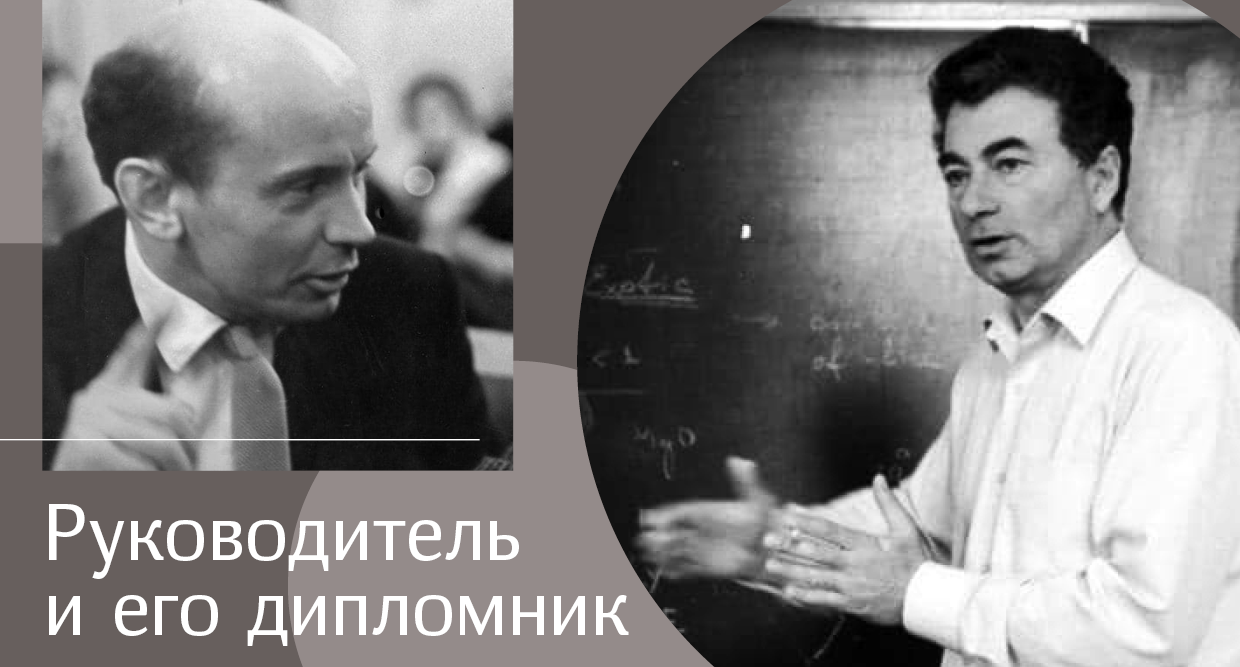
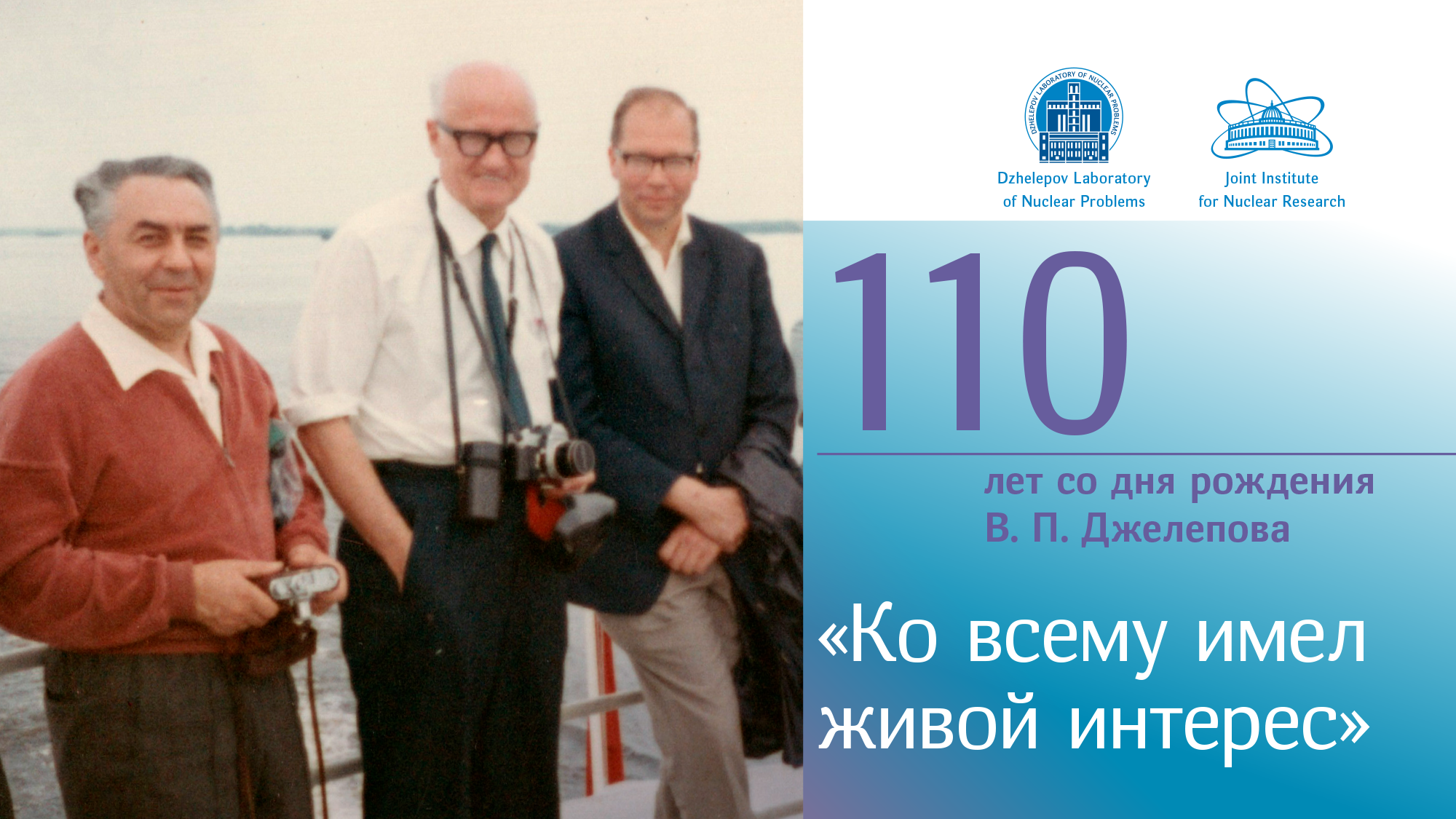
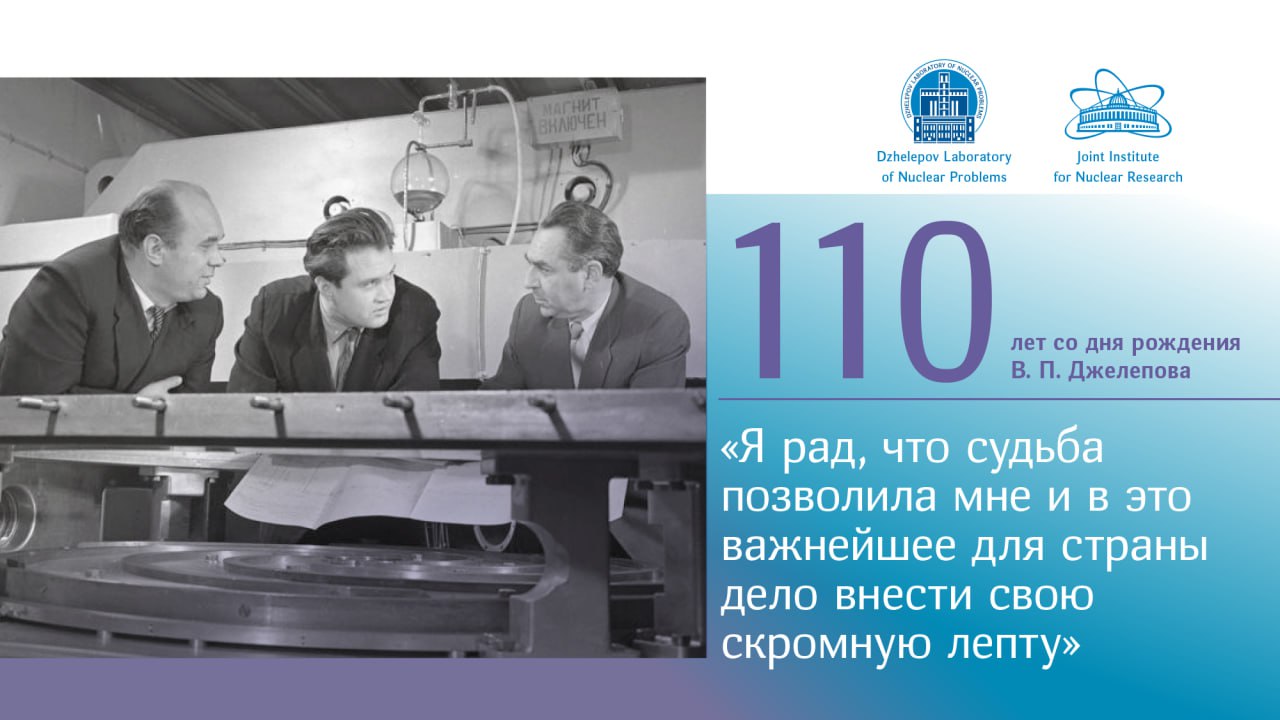
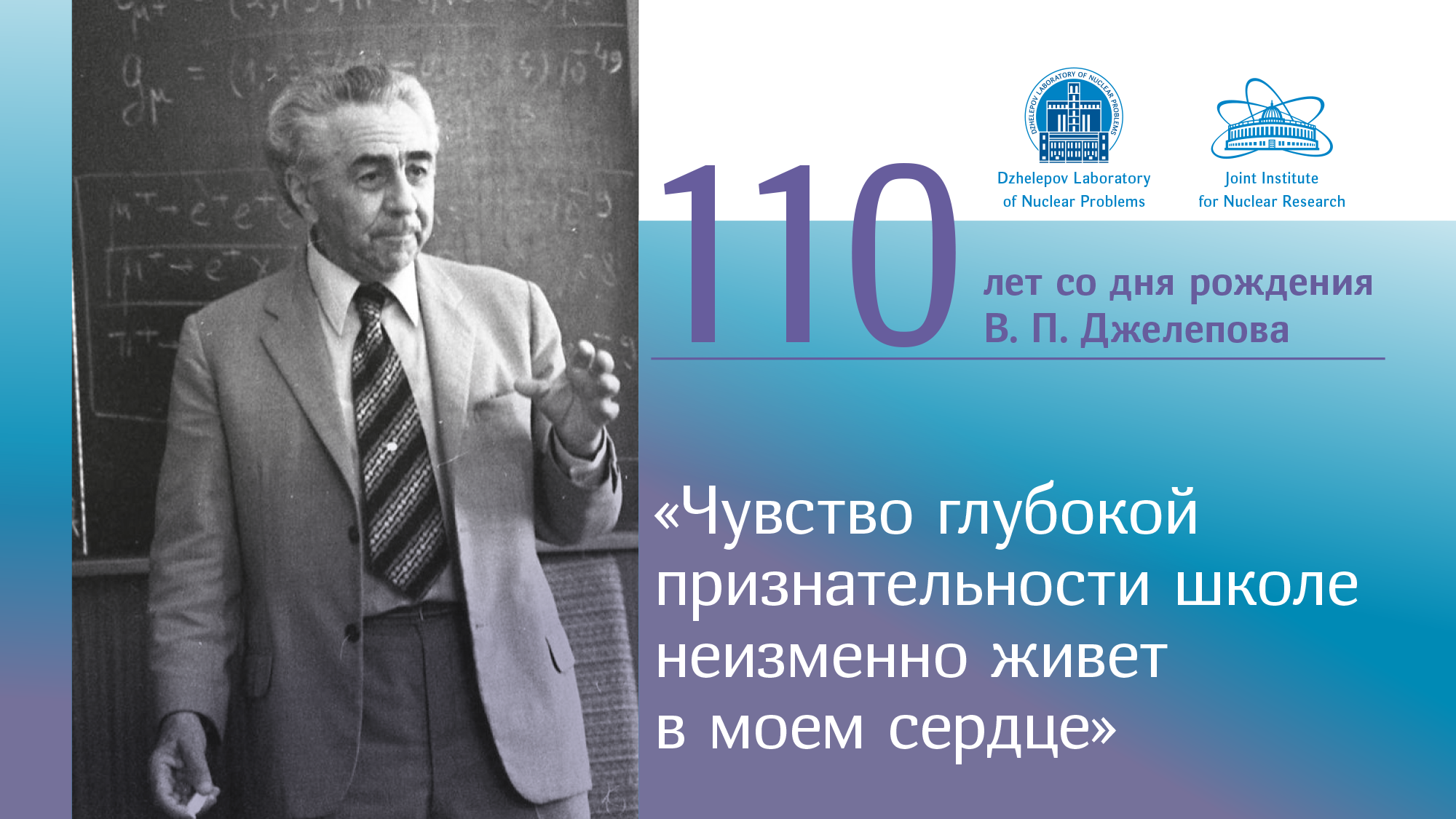
V. P. Dzhelepov

The work was of a great importance for V. P. Dzhelepov and required a lot of power and efforts. However, he had a wealth of vital energy and love of life enough to share them with his family and friends and spend for hobbies. Quoting the memoir by Irina Grigorevna Pokrovskaya, a secretary of Venedikt Petrovich… “Venedikt Petrovich was happily married. He met Tatyana Nikolaevna (Zinovieva) in Leningrad in 1941, shortly before the outbreak of war. Ever since he had loved her tenderly and devotedly, and over all ten years he lived through after her death, he grieved deeply for her.
24.03.2023
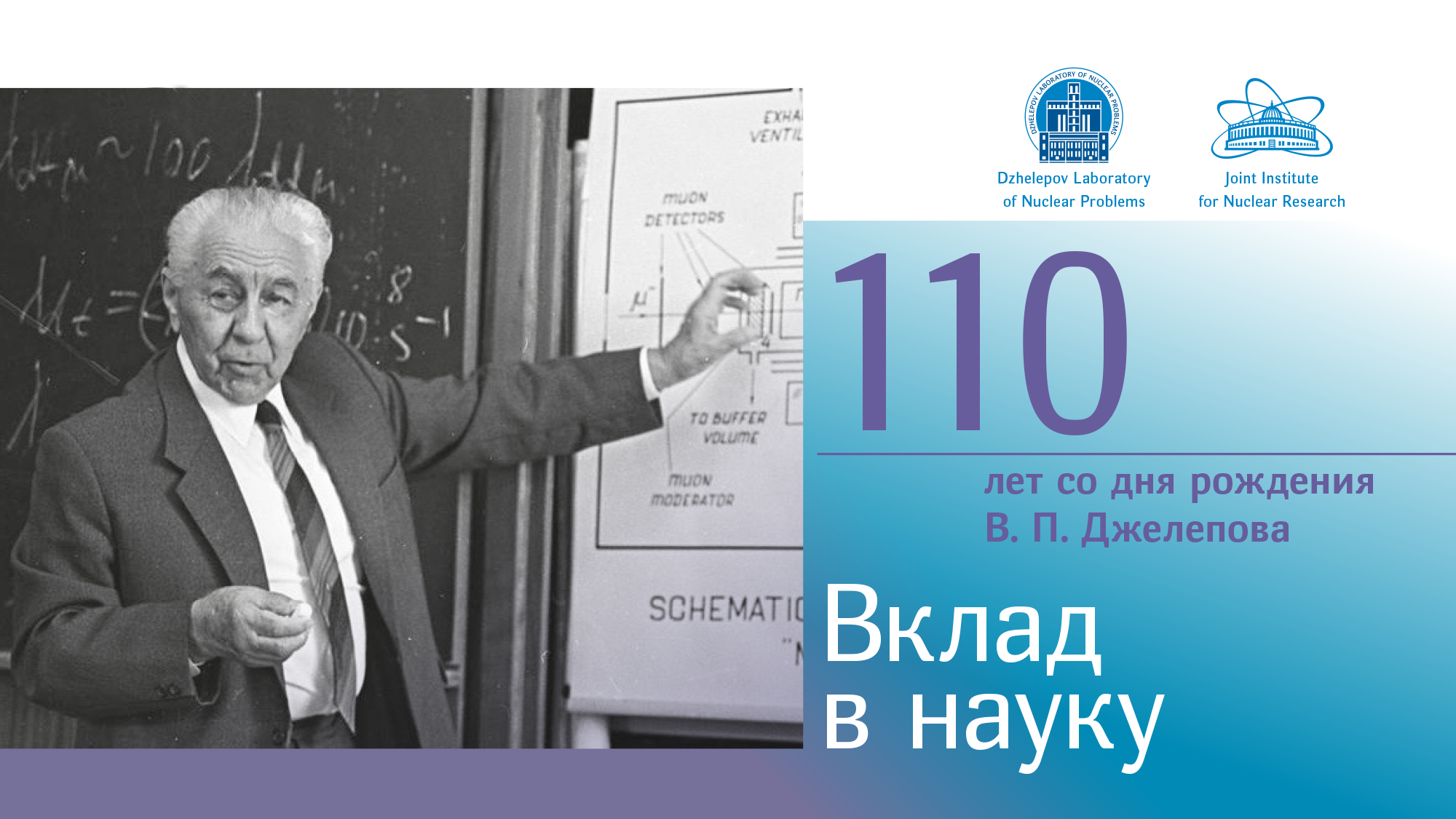
V. P. Dzhelepov, the first director of the JINR Laboratory of Nuclear Problems, was not only a talented administrator but also a great scientist. He was fond of physics and knew which areas were worth focusing on. “Venedikt Petrovich had an exceptional intuition about what areas in science would become the main ones at this or that moment,” wrote academician S. S. Gernstein. Thanks to that intuition, the key directions of DLNP scientific activity were established, some of which are successfully evolving nowadays.  
17.03.2023
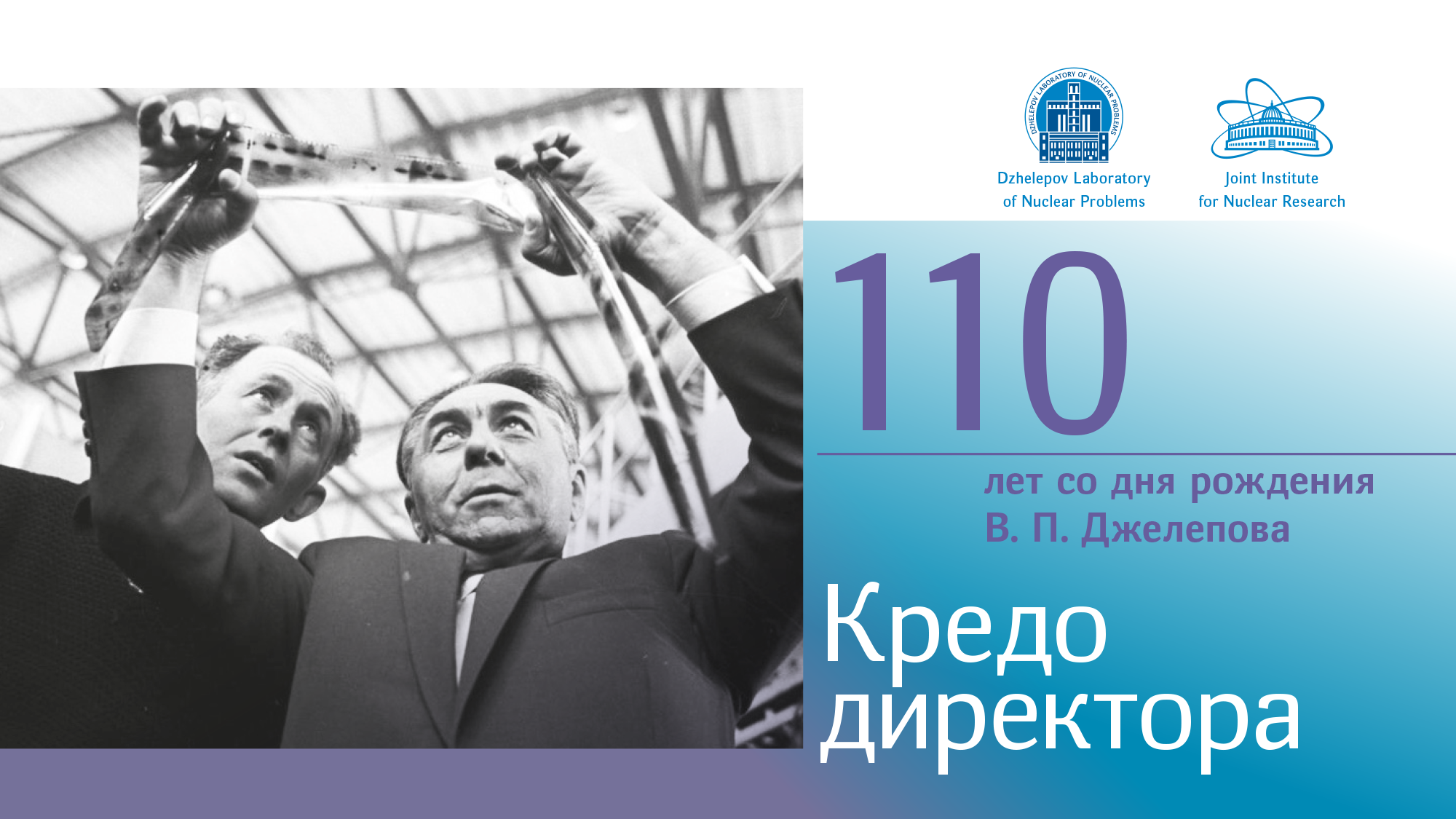
“The most important principle for a leader of a scientific institution is not to impede a more talented colleague. To impede is a disaster. To support any good initiative and not to be afraid of a star coming to you with more talent than you have, with more skills, with greater ideas is a blessing. To help this colleague to unfold himself is the main task of a good leader."  
10.03.2023
Venedikt Petrovich Dzhelepov wrote: «I will share with you a curious story told me by Boris Lvovich Vannikov, the head of our First Department. He says, “You as a deputy director have difficulties, but you cannot compare your difficulties to those Kurchatov and I had had, yours are mere trifles. Well, imagine, the bomb was manufactured and set off. And they began awarding, giving honourable distinctions.  
08.02.2023
“My personality was formed both in Soligalich, where I got my primary and secondary education, and in Leningrad, where I had been working at plants for two and a half years and graduated from the institute in 1937.”

B. M. Pontecorvo

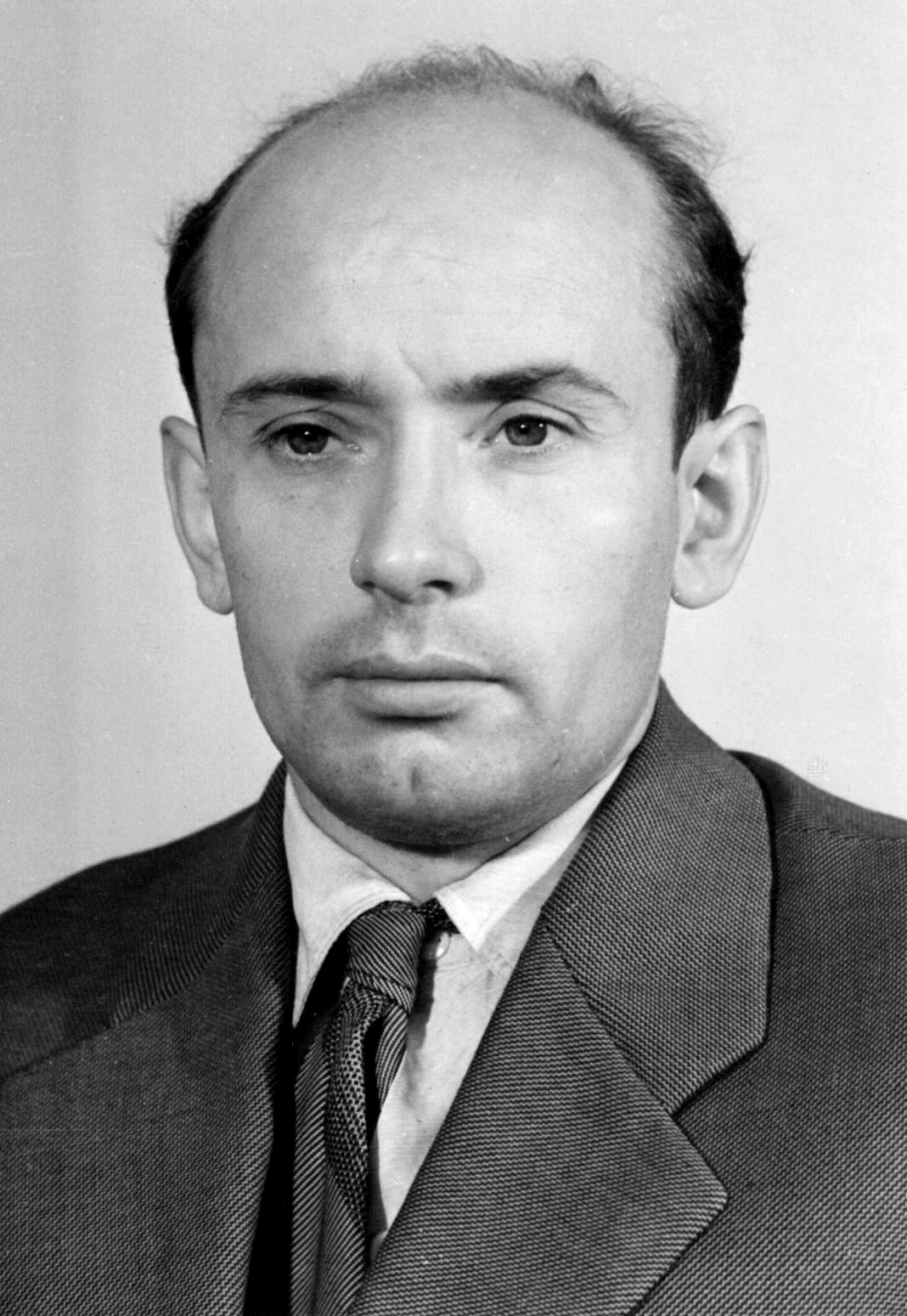
Когда в 1950 году Бруно Понтекорво прибыл в СССР вместе со всей семьей, его супруге, шведке Марианне Нордблом, выпускнице Сорбонны, было 33 года. Лаура Ферми, познакомившаяся с Марианной в 1948 году в США, вспоминала: «Марианна была маленькая светловолосая женщина. Она выглядела необыкновенно молодо, просто не верилось, что у нее трое детей. Она сидела на краешке стула, и видно было, что она мучительно стесняется. Все мои попытки подружиться разбивались о ледяную скованность этой застенчивости. Она оттаяла только на одну минутку, когда я после обеда начала при ней складывать посуду в автоматическую судомойку. Тут ее ясные голубые детские глаза загорелись интересом.

Time's witnesses

XX century. Daily life of a researcher

From 12 April to 12 August, you are invited to the exhibition “Daily Work Routine of a Researcher of the 20th Century” celebrating the 65th JINR anniversary. The objects of interest from the collections of the JINR Museum of Science and Technology and also from the Museum-Study of Bruno Pontecorvo (DLNP, JINR) are showcased at the JINR Museum. JINR researchers used these everyday-life pieces for their work in the 1950s—1990s. Here you will find documents, photographs, scientific instruments and devices.
19.03.2021
Dear friends! You are reading the last post of our Friday Column “The 20th century. Everyday life of a researcher” created to celebrate the 65th anniversary of our Institute.
12.03.2021
In our latest Friday column issue “The 20th century. Everyday life of a researcher” we wrote about wall newspapers at JINR laboratories. Our readers told us that DLNP also had its own wall newspaper Luch (Ray). One of its editors was Georgy Aleksandrovich Shelkov. Here is his story.  
05.03.2021
The holiday is coming. A good reason to remember folk art which was in full swing in laboratory rooms on the eve of holidays and anniversaries when employees created real congratulation masterpieces for their colleagues.
26.02.2021
Today, it’s quite usual to meet a person with earphones. One can listen day and night to his favourite music, podcasts, and news from tens and thousands of radio stations of the world transmitted on the Internet.
12.02.2021
Arguments of e-book readers and adherents of good old paper books are gone. The war between “Little-Endians” and “Big-Endians” wasn’t declared. Someone reads only digital books, another one accepts only paper books, a third one buys both—anyway, a book is something more, an aesthetic pleasure.
05.02.2021
This curious headset from the past is an exhibit in the Museum-Study of Bruno Pontecorvo at DLNP. We assume that this device was intended for delegates of international conferences in order to listen to simultaneous interpretation.