

News
07.10.2020
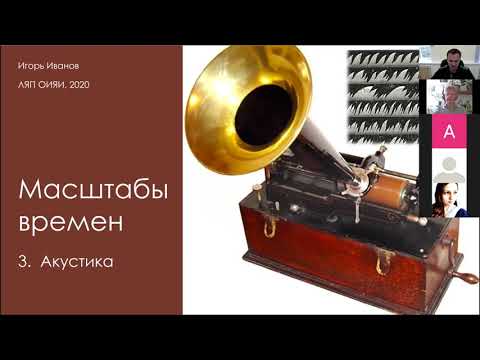
Human frequency range and home experiments. Phonetics and formants. Acoustics history across the 19th century. Sound absorption.
07.10.2020
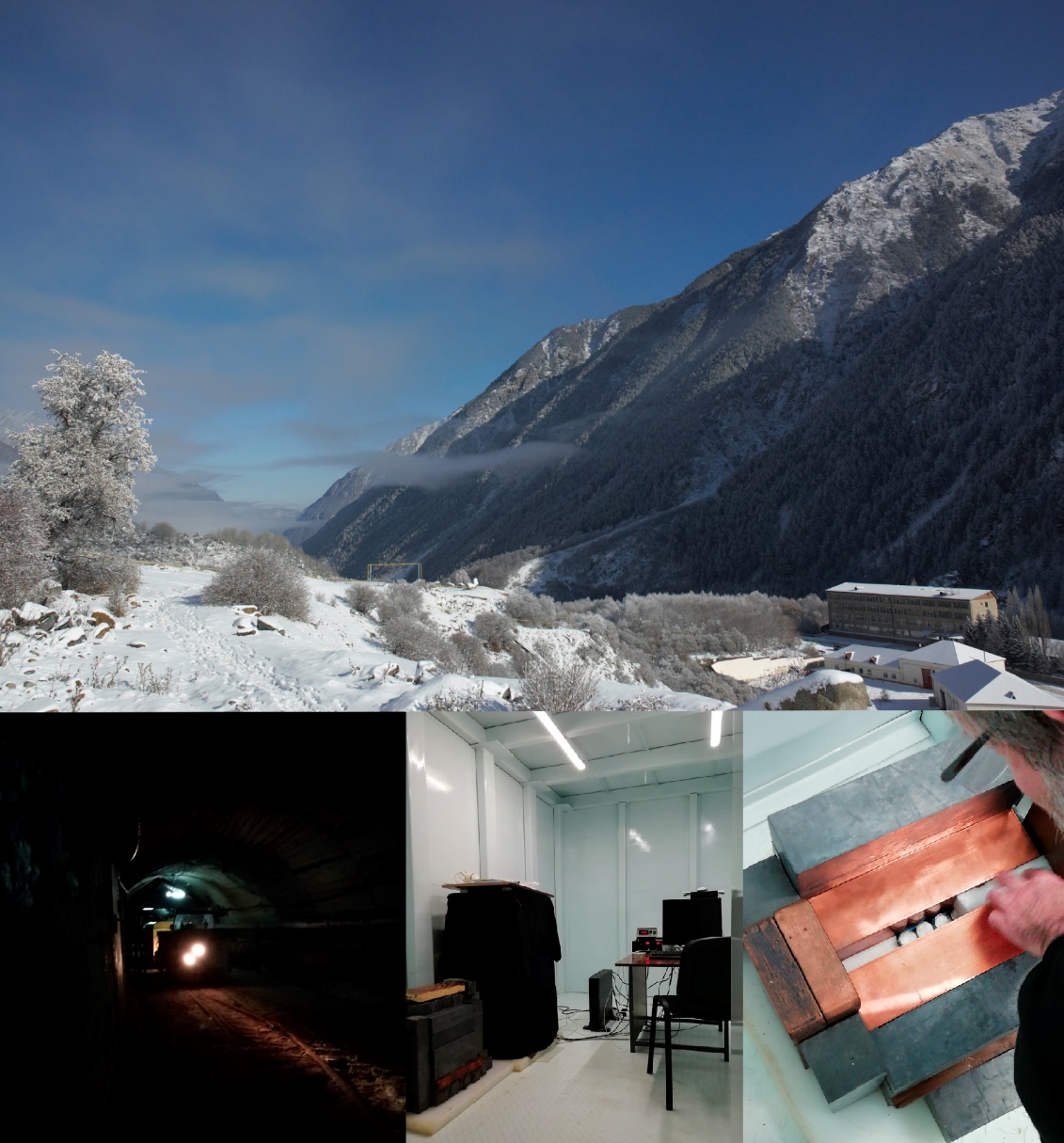
All living things on Earth originated and evolved in a natural radiation background environment. That is why the reaction of living objects to the almost complete suppression of the natural radiation background in deep underground neutrino laboratories is of great interest to biologists across the world over many years. In November 2019, the experiments conducted by the Molecular Genetics Group (DLNP, JINR), along with the Laboratory of Low-Background Research (BNO, INR, RAS), got underway in the unique environment of the DULB-4900 low-background laboratory (Neutrino village, Kabardino-Balkaria) located 4 km away from the tunnel entrance about two kilometers deep under the Andirchi peak (3937 m).
02.10.2020
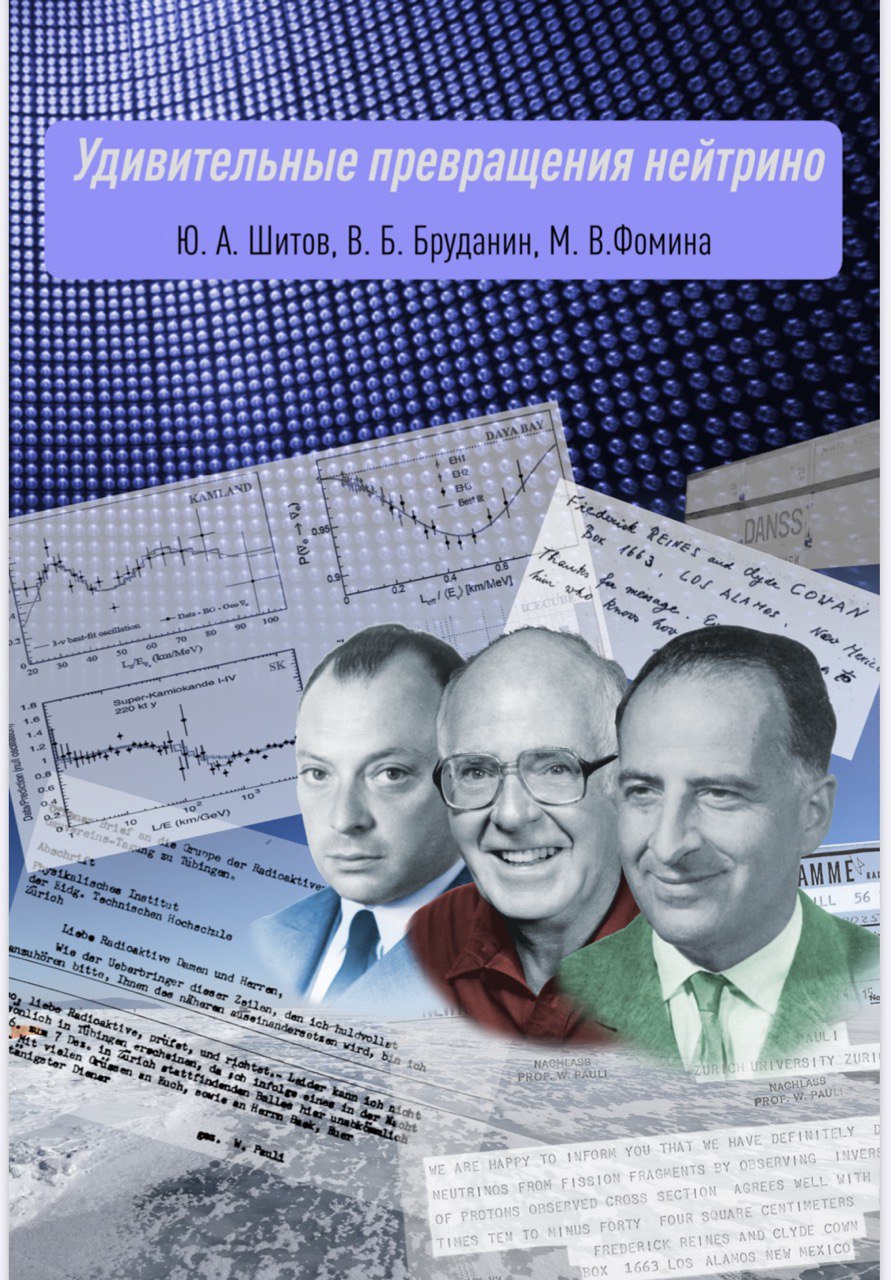
The booklet “Amazing neutrino transformations” written by Yu. A. Shitov, V. B. Brudanin and M. V. Fomina has been released at the JINR Publishing Department. The issue is devoted to the birthday of Vyacheslav Georgievich Egorov (02.10.1953―07.07.2019). A striking and captivating story about the evolution of neutrino research is simple and easy-to-follow, now and then really amusing. The authors’ objective was to demonstrate the role of the scientist’s personality in fundamental discoveries and investigations. The booklet also describes the DANSS neutrino project whose initiator and leader Vyacheslav Georgievich Egorov was. Finally, the TOP-10 scientific problems in neutrino physics worth the Nobel Prize are presented in the last part of this essay.
You can find an e-booklet here. A hard copy is available from Elena Dubovik in Room 216 in the DLNP Directorate Building or from Tatiana Anatolievna Morozova in Room 219 in the Experimental Department of Nuclear Spectroscopy and Radiochemistry.
30.09.2020
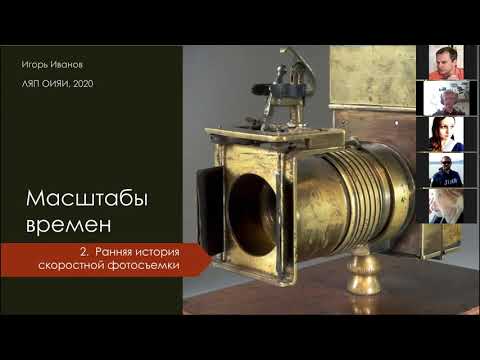
The birth of photography. Exposure time: hours, minutes, seconds. “Momentary” photography. Muybridge’s horses and Marey’s chronophotography. Mach’s microsecond image.

28.09.2020
A series of educational videos “BAIKAL-GVD. Neutrino Hunters” covers the construction of the unique facility for detecting neutrinos in Lake Baikal, objectives of the experiment and people involved. This series illustrates all the serious and funny, the magnificent and ordinary, the simple and complicated—everything that the people face striving to reveal the next mystery of the Universe.
25.09.2020
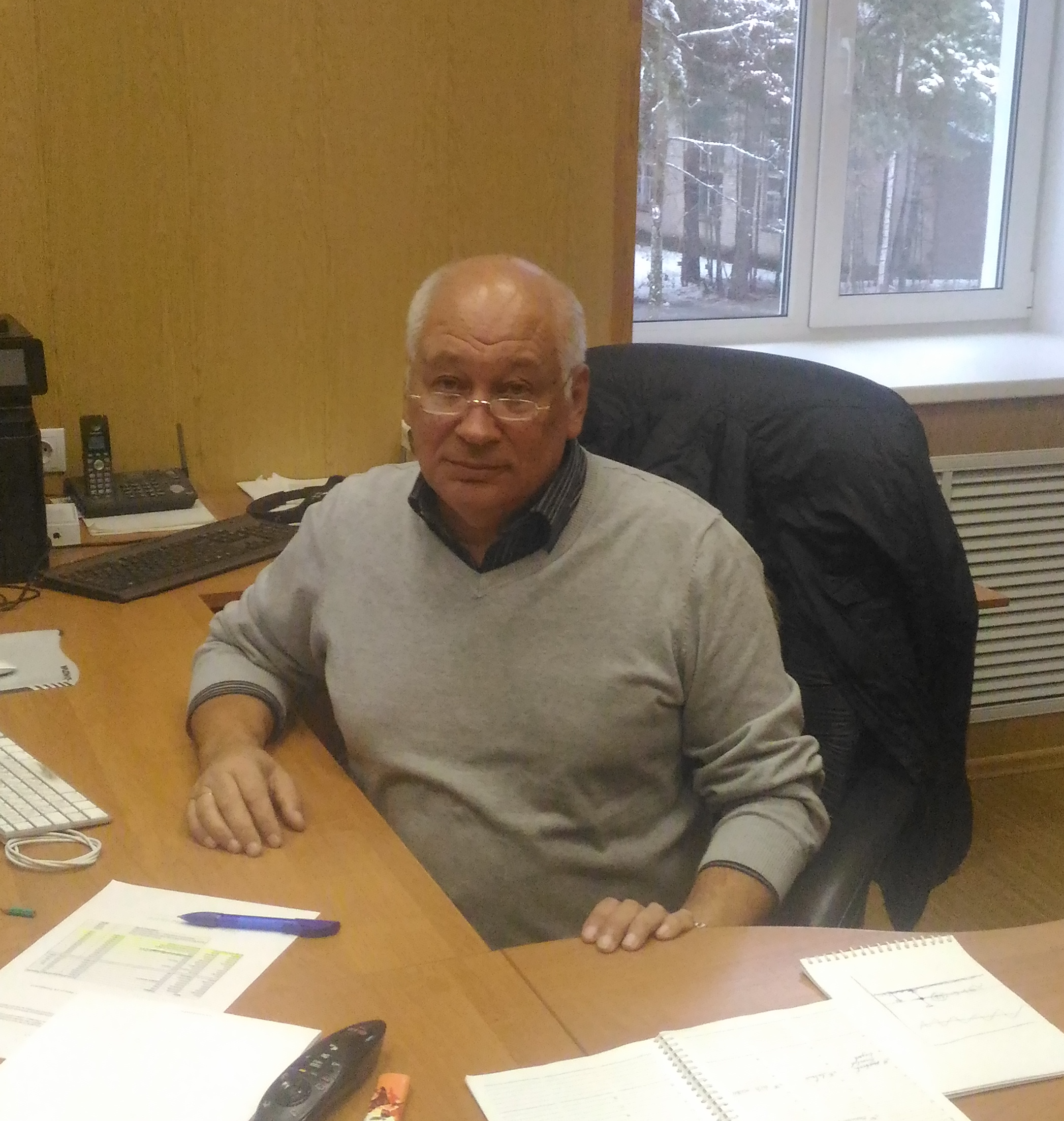
On 26 September 2020, Alexander Grigorievich Olshevskiy, Head of the Experimental Department of Elementary Particle Physics at the Dzhelepov Laboratory of Nuclear Problems, is 65.
A. G. Olshevskiy started working at DLNP (JINR) in 1979 immediately after graduating from the Faculty of Physics of Moscow State University where he majored in physics. From 1979 till 1982, he was a trainee researcher at DLNP. From 1982 till 1987, he worked as an engineer there. From 1987 till 1991, he was a researcher, and in 1991—1995, a senior researcher. In 1995, A. G. Olshevskiy became a leading researcher. Over the period of 2003—2013, he acted as DLNP Director. Since 2013, he has been working as Head of the Experimental Department of Elementary Particle Physics.
23.09.2020
Phenomena of the world around and photo experiments with things at hand. Vibration of microscopic drops. How to catch a 1-kHz flickering with an unaided eye.
21.09.2020
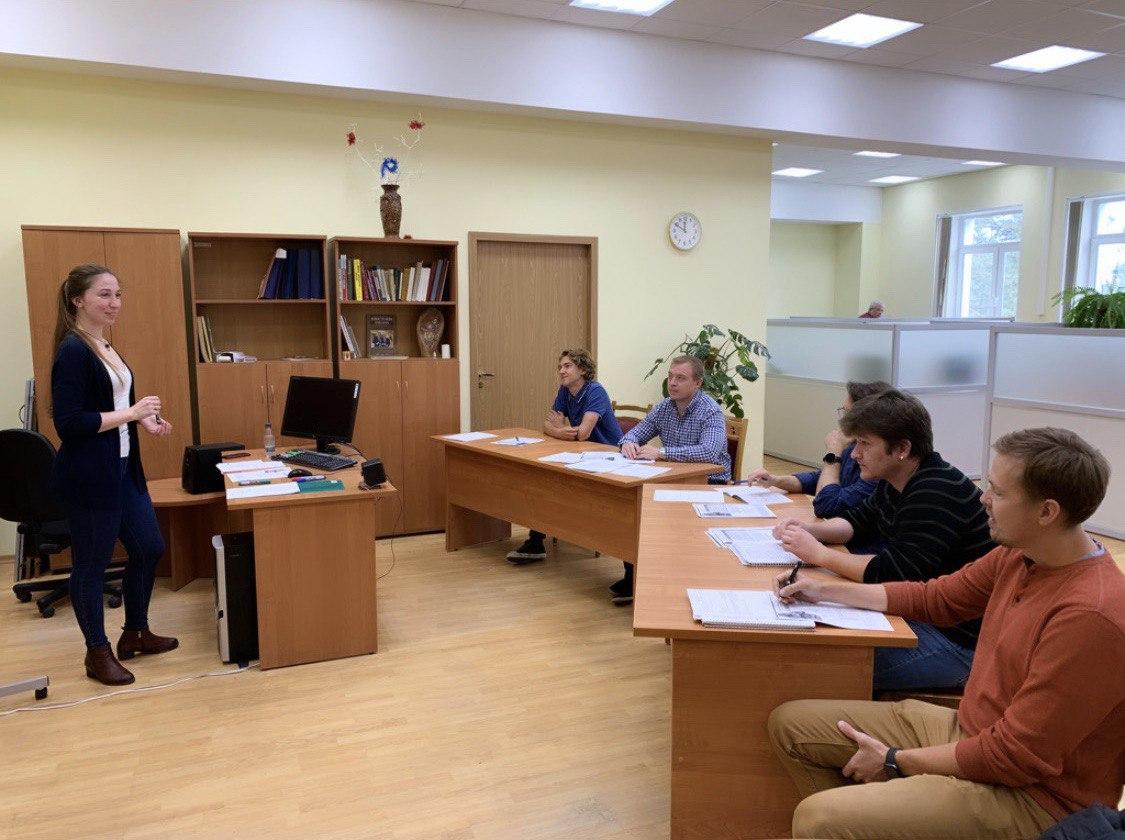
Engineering Department is an important unit of our Laboratory. It is the place where ideas of scientists transform into drafts and calculations for manufacturing devices and facilities. The involvement in international collaborations requires a high level of English. And it should be not an everyday English, but a specialized one.Several employees of Engineering Department are taking the course of this kind at present. There is grammar, written translation and a study of specific terms in the curriculum. The classes are provided by the JINR University Centre. The course will be completed by the session on presentations.
21.09.2020
The Ministry of Science and Higher Education of the Russian Federation, the initiator of the competitive selection along with the Council for Grants of the President of the Russian Federation for the state support of young Russian scientists and leading scientific schools of the Russian Federation, announces a competitive selection for the Scholarship of the President of the Russian Federation for young scientists and postgraduates performing promising studies and pioneering innovations in the priority fields of modernization of the Russian economy.
Scholarship information is listed below.

17.09.2020
An overwhelming world of rapidly-evolving phenomena is squeezed into one second. Objects, matter, atoms, nuclei—specific processes unfold at every special scale in various time ranges. With this series of compact educational lectures, we will walk down the stairs of time ranges—milliseconds, microseconds, nanoseconds, picoseconds and even deeper. We will focus on the interplay of phenomena, and historical sketches about the first attempts of novice researchers in different areas will complement the narration.
23.09 15:00 Lecture 1. Milliseconds and microseconds. Phenomena of the world around and photo experiments with things at hand. Vibration of microscopic drops. How to catch a 1-kHz flickering with an unaided eye.
17.09.2020
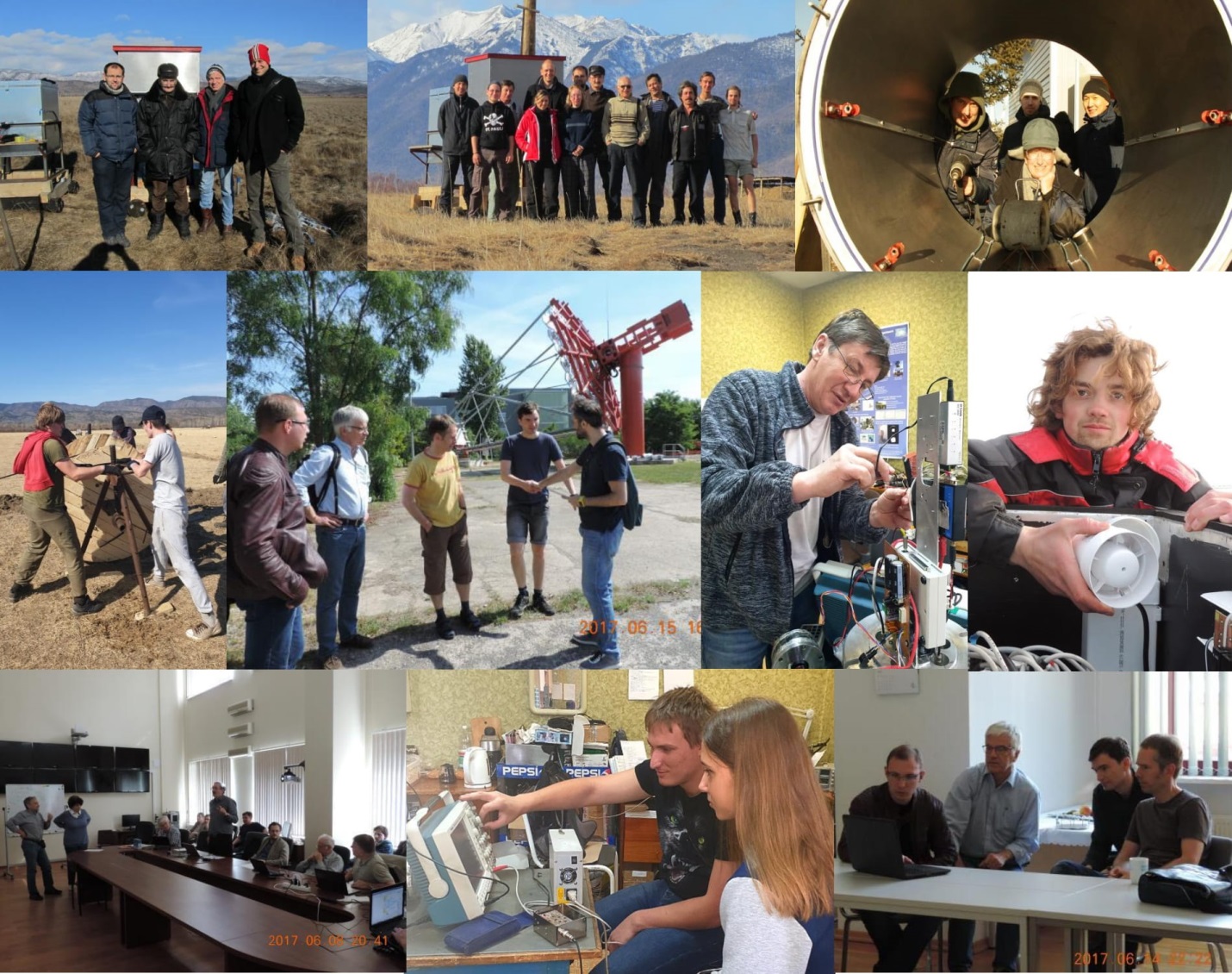
On 15 September 2020, at the closing ceremony of the Russian-German Year of Scientific and Educational Partnerships in 2018-2020, the winners of the Open Russian-German Competition "Russia and Germany: Scientific and Educational Bridges" received their awards. The Ministry of Foreign Affairs of the Russian Federation and the Federal Minister of Foreign Affairs of Germany summed up the results of the Year and named the winning projects during a live broadcast. The project "The TAIGA Observatory - Russia and Germany open a new window to the Universe" was recognized as the winner of the Competition in the category "Advanced Research" for successful long-term scientific cooperation.
16.09.2020
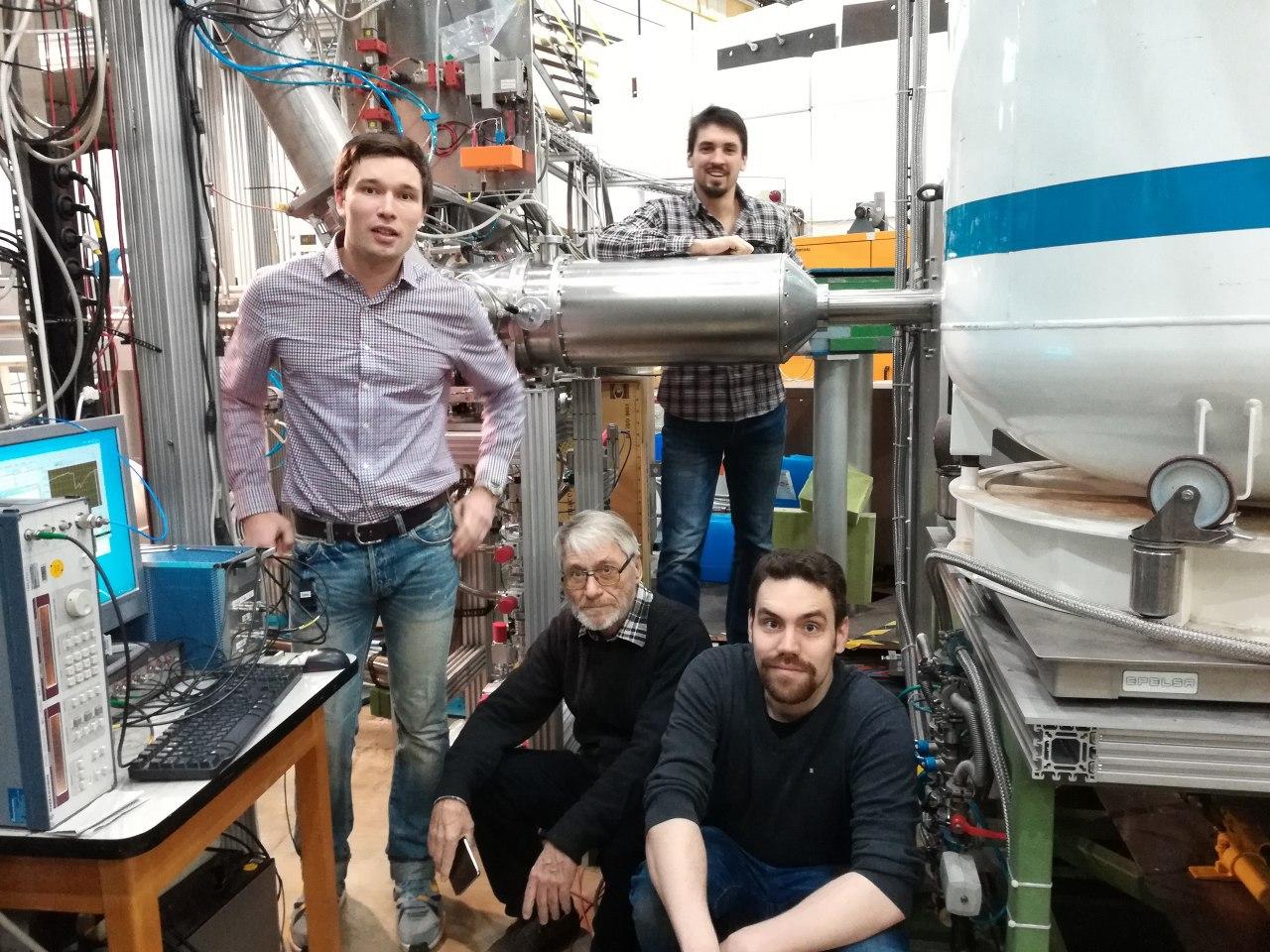
The research team from the Section of Low Temperatures (DLNP), Ivan Gorodnov and Anton Dolzhikov, became a laureate of the annual Moscow Region Governor’s Prize in Science and Innovations for Young Scientists and Specialists!
"Every year, scientists and research teams from the Moscow region introduce the most promising scientific projects and studies in various fields to competitive selection and become laureates of the Moscow Region Governor’s Prize in Science. This year, for example, studies in medicine, nuclear technologies, material science, physics, chemistry and other scientific directions were awarded the Prize. The Prize is accompanied by a monetary award of 700 000 rubles," said the Minister of Investments, Industry and Science of the Moscow Region Ekaterina Zinovieva. The Governor of the Moscow Region Andrey Vorobyov established 15 awards in science and innovations for young scientists and specialists. In 2020, 13 scientists and two research groups became the winners— representatives from Chernogolovka, Pushchin, Fryazin, Dubna, Korolev, Mytishchi, Odintsovo, Shatura, Podolsk and also an employee of the Moscow Regional Research Clinical Institute (MONIKI, Moscow).
Dear Anton and Ivan, congratulations on your victory! We are proud of you! We wish you to achieve even greater heights and every kind of success!