Another expedition to deploy Baikal Neutrino Telescope began
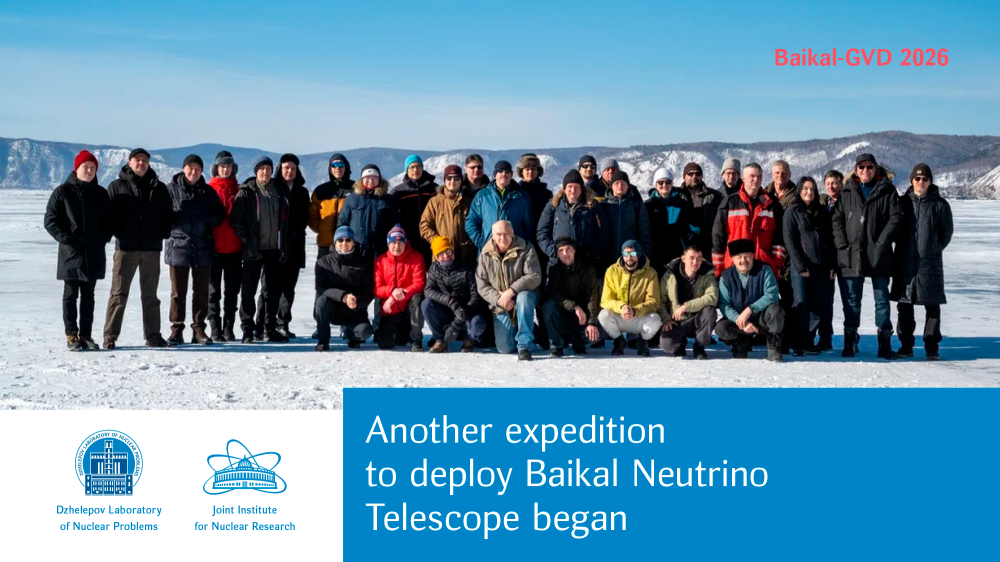
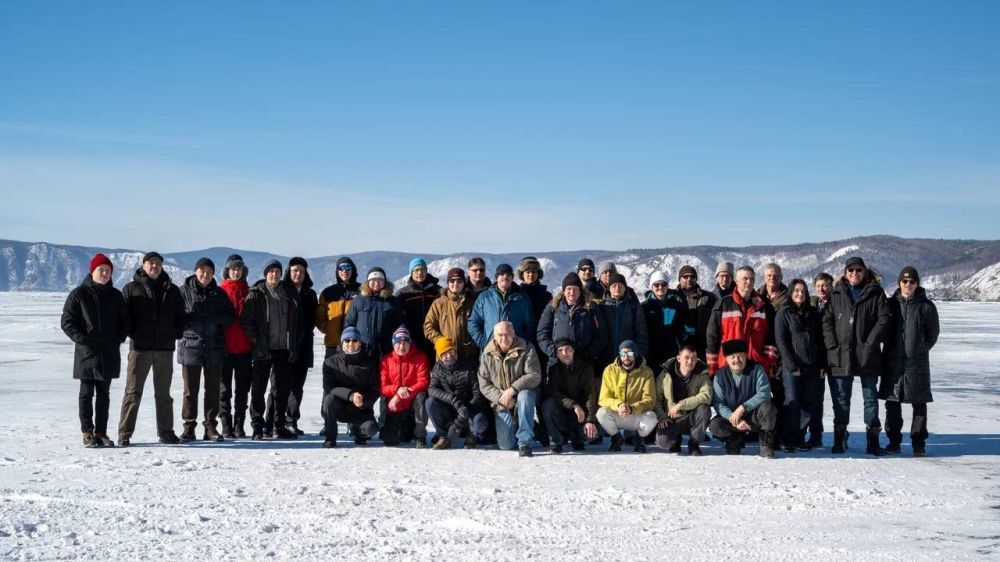
The first group of participants has arrived at the shore station of the Baikal Neutrino Observatory to carry out work on deploying new clusters of the Baikal-GVD detector. The ice conditions on the lake give hope that the collaboration's plans will be fully implemented. During the 2026 expedition, it is planned to lay two bottom cables and commission two complete clusters of the standard configuration. The total staff of the expedition will be nearly 70 people.
For the reference
The Baikal-GVD neutrino telescope is aimed at detecting and studying ultra-high energy neutrino fluxes of astrophysical origin. Using the telescope, scientists study not only processes with enormous energy releases that occurred in the distant past, but also the evolution of galaxies, the formation of supermassive black holes, and the mechanisms of particle acceleration.
Baikal-GVD is one of three operating neutrino telescopes in the world, and, along with IceCube at the South Pole and KM3Net in the Mediterranean Sea, it is included in the Global Neutrino Network (GNN).
The Baikal neutrino telescope is being built by international collaboration, with leading roles played by the Institute for Nuclear Research of the RAS (Moscow), the founder of the experiment and field “high-energy neutrino astronomy” in the world, and the Joint Institute for Nuclear Research (Dubna).
The 2026 expedition is organized by the Institute for Nuclear Research of RAS (Moscow), the Joint Institute for Nuclear Research (Dubna), and Irkutsk State University.
Photos by Bair Shaybonov